• Home
  • Melted and Molded
  • Apartment 3N
  • My Sister’s House
  • While She Is Away
  • The Final Telling
  • The Last Father’s Day
  • Watch The Rack
  • The Gathering Place
  • Photographs and Memory
  • Boy Meets Girl
  • Michael Calderwood

Thoughts From The Back Of The Room

~ Words Matter

Category Archives: Local politics

Everybody Knows That!!!

26 Wednesday Feb 2020

Posted by Michael Calderwood in Beautiful Cambria, Cambria CCSD, Communicating, Community Involvement, Educating a Community, Emergency Preparedness, Emergency Services, Home, Humor, Local politics, Searching for Cambria's Reality, Social Responsibility, Words matter

≈ 4 Comments

Tags

Cambria, Choices, Community, Disaster Preparedness, Emergency Services, Local News

Johnny Carson used to say “I did not know that!” Was he the last honest man?

A major insurance company has revived a series of television ads featuring a “fractured fairy tales” approach to classic characters. The setup of “everybody knows that” is followed by a “well, did you know…” leading to an absurd premise. My favorite spot features Pinocchio as a failed motivational speaker. Everything from the concept to the actors is note-perfect. I particularly love the facial expressions – first, the kid’s reaction to his father’s assertion that the fictional boy lacked sales skills, to the crestfallen response from the seminar attendee who sees the wooden wonder’s nose betraying his words that “you have potential…”

geico-pinocchio-was-a-bad-motivational-speaker-large-9

If you pay attention, you might see similar looks on the faces of fellow Cambrians as they ingest information from different sources in and around town.

ZAP!

A short while back, an incident occurred where power lines fell across the only legal access road into and out of one of our neighborhoods. Cambria Fire and CalFire responded to the event and followed emergency protocols. Safety first. They took up positions to keep people from coming in contact with the still-charged lines.

According to the Cambria Fire crew that responded, there was a real danger. Active fire impacted the poles on either end of the cable run. The lines that fell into the street were charged and arcing. Yet, even with this crazy and highly visible danger, people were driving and walking around the firetrucks, ignoring the orders to stop. Dumb and dangerous to the citizens and the first responders.

Why?

With the road blocked, residents were not able to get out of the neighborhood. This blockage presented some real headaches, as folks needed to get to work, or school, or to a big pro-or- anti -swimming pool meeting. An inconvenience, to be sure.

A citizen approached the firefighters and asked if they could open the gates at the emergency fire road that traverses the Fiscalini Ranch Preserve. The crew declined, saying they didn’t have the resources to spare.

So, here’s where the false premise of “everybody knows that” comes in. Grumblings began that the firefighters “didn’t have the resources” – which translated into “they didn’t have a key to the gates.” Which turned into “nobody knows who has the key to the gates.” which became “if this were an evacuation scenario, nobody would know how to open the gates.” And on and on it grew.

Eventually, a community member in possession of a key unlocked the gates at either end of the emergency road, and people were able to use it to exit the neighborhood.

Begats

A legitimate emergency – downed power lines -begat an inconvenient situation – no exit from the neighborhood – which begat irresponsible actions – driving and walking around the emergency vehicles and through the danger – which begat a questionable use of an emergency road across a protected preserve – which begat a series of assertions about emergency response preparedness.

Not Everybody Knows That!

The reality is that there are plans to handle emergencies and facilitate evacuations if needed. There are protocols in place, including communications plans, multiple agencies and civilian responders with assigned duties, and plenty of keys to go around.
All of this information has been published, shared, mailed, reported out on, posted, and promoted for citizens to read and absorb. There was a major town hall meeting this past June 29, 2019, focused on fire safety and emergency response plans. Hundreds attended. It was even on the TV.
In January of this year, there was a second town hall meeting hosted by the Cambria FireSafe Focus Group. The Vet’s Hall was packed. Representatives from Highway Patrol, SLO Sheriff’s office, CalFire, Cambria Fire, Caltrans, and SLO County’s office of Emergency Response shared their emergency response plans. Each presenter engaged in Q&A with the attendees. Printed material, websites, and contact information were given out.
But still, in this contained, limited event, things spun out, with people demanding answers and making statements that were more from annoyance and ignorance of the facts than anything else.
So what would happen in a real emergency? Who will respond, and how?

For a quick and helpful primer, go to the FireSafe Focus Group/Cambria Fire website.

Says Who?

Cambria’s agencies work hard to make as much factual information and data available. Public meetings provide the opportunity to see and hear what is going on. Yet, these meetings are often sparsely attended. Citizen engagement often means the same small handful of folks trooping to the podium to express the same small handful of opinions and grievances, with an occasional “atta boy” for a well-done job or a significant individual accomplishment. Of course, there are also a fair amount of thoughtful, probing, and important questions raised that drive action and greater community awareness.

What is more remembered, the protestation, or the response?

Who Has That Kind Of Time?

Public meetings are often long, sometimes confusing, and regardless of the time of day, difficult for many to attend. There have been honest efforts to try different schedules to drive more attendance, but the result has been the same. So how else do citizens and interested parties get their information?

LIVE!

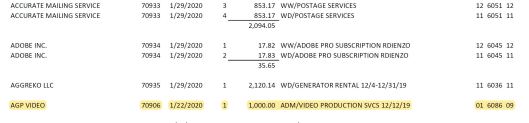
Community Services meetings are live-streamed as they occur, and broadcast on local public access television. The recorded sessions are archived and accessible within a few days so that interested people can watch the sessions at their convenience. These services come with a price – a rough estimate of the fees charged to facilitate these channels come in around $1K per session – costs increase when the meetings go over the scheduled time. With two meetings per month, plus additional special meetings that might be broadcast, the amount spent adds up.
AGP

Excerpt from Feb 20, 2020 Board Packet

Anybody Home?

I was curious as to how effective this process is – how many people watch or listen remotely? I reached out to AGP to gather some data. After some back and forth, they told me they only provide that information to the agencies they serve. I followed up with CCSD staff who returned the following stats. It appears these hits were not previously tracked, so I was only able to get one month’s numbers. They provide limited information, but something worth monitoring over time.

Here’s AGP’s statistics for January 2020 CCSD meetings, provided through a public records request.

CCSD 1.16.20:  LIVE: 16

CCSD 1.22.20:  LIVE: 22

CCSD Archive views for the month of January to date: 82

It seems like a lot of money for a little return.

Hosted Websites

The Services District and the Healthcare District host websites that contain information about what goes on in each organization, as well as legal, regulatory, and organizational details that support many of the district policies and practices.

The CCSD site has been recently overhauled and has become more user-friendly. According to the data collected by Google Analytics and provided through the Public Records Request process (accessible through the website,) a good number of people use this tool to gather information and seek answers to ongoing puzzlements.

From January 20, 2019, through January 26, 2020, the Cambria Community Services District website was accessed 87,690 times, with 68,394 unique page views. That is a pretty good amount of traffic, though the top pages were a bit of a surprise.CSDWEBTRAFFIC
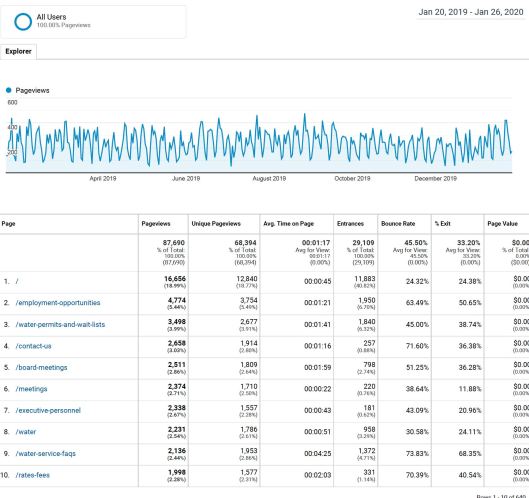
The complete list of results can be found in the following link:

CCSD_CombinedWeb

The Healthcare District website is currently undergoing a redesign, with the goal of making it both user and administration friendly. The work is being done by an active District employee, often in his free time, so it might take a while before it is ready for publication.

Widen The Lens

There has been a sporadic outcry around CCSD directors and staff using electronic devices during meetings, with the subtle and occasional direct accusation that all manner of nefarious communication was happening between board members and mysterious influencers and special interests.

Rather than rail against the perceived downside of electronic communication, why not embrace the potential and expand its use? Open a web channel to the meeting that would allow viewers to submit questions or comments to the presiding clerk, have the item read out loud, and have the written/electronic dialog entered into the minutes. Viewers who wish can ask their questions or make comments through the microphones on their computer, tablet, or smartphone. Brave citizens having a good hair day can turn on their camera for their allotted three minutes. More people will have the opportunity to “speak” to the board, staff, and community without the challenges of having to physically be “in the room where it sometimes happens.” Caller number five could win a toaster!

Businesses engage with clients all around the world in this fashion, using video and audio to make personal connections that increase understanding and decrease uncertainty. Participants can make “eye contact” through video, exchange written comments and conduct Q&A through chat/messaging features, upload documents for review and comment in real-time. Tone, tenor, facial expression, body language – all contribute to a complete dialog.

But..but…Cambria has old people who don’t use computers!

Really? Take a look at local social media sites and get back to me!

Let’s try it!

Shot Clock

Public commenters are limited to three minutes per item, with the board President controlling the clock and having some discretion with the time.

I suggest the same (or even shorter) time limits should apply to each board member who wishes to speak on a topic. Yes, the dialog between the members is essential and should happen freely. It is sometimes the case, however, where a director will go on a ramble. That suggests a lack of preparation.

Put together a compelling thought and present it in a manner not requiring a map, a compass, a dictionary, and some of that free coffee from the back counter. Each director should prepare their thoughts in advance and know what points/questions/positions they wish to share. Write it down. Read it back. Time it. Edit. Repeat. Speed up the meetings and reduce much of the frustration of fellow directors, staff, and the public who are trying to follow along. It may seem like this would limit dialog, but in my view is it would make dialog more effective and drive better results.

Takeaways

Even with all the efforts to communicate critical information throughout the community, there are, and will always be, gaps in our collective knowledge. Information is everywhere, we just need to look, ask and at times suggest better ways to share what we know, and what we would like to know. This community is blessed to have a good number of people who help all of us stay smart and safe. But as we are often reminded, we are each responsible for our own well-being.

Just because we may not know something, that doesn’t mean it’s unknowable. As Pinocchio tells us – we all have potential!

Share this:

  • Click to print (Opens in new window) Print
  • Click to email a link to a friend (Opens in new window) Email
  • Click to share on X (Opens in new window) X
  • Click to share on LinkedIn (Opens in new window) LinkedIn
  • Click to share on Facebook (Opens in new window) Facebook
Like Loading...

Saturday Sessions – Water Works

07 Saturday Sep 2019

Posted by Michael Calderwood in Beautiful Cambria, Cambria CCSD, Communicating, Community Involvement, Educating a Community, Local politics, Searching for Cambria's Reality, Words matter

≈ 2 Comments

Tags

Cambria, Choices, Community, Community Involvement, Leadership

Remote Thoughts – Home Viewing Version

(or, How I Spent Mike Lyons’ Birthday)

The tradition of Cambria’s Saturday morning community forums continued September 7 with a session focused on the town’s water supply systems, and particularly the “EmergencySustainableAdvancedWaterFacilityMachineSystem” ™ patent and permit pending.

Cambria Community Services District Board President Dave Pierson, resplendent in navy blazer and open-collared, pinstriped button-down shirt, facilitated the forum. Attendees and viewers received a well-crafted and smoothly delivered fact-and data-filled presentation. Those at the Vet’s Hall enjoyed a tantalizing and delicious (I imagine) array of freshly baked cookies created by the delightful and community-minded Karen Dean.

The session was thoughtfully constructed and delivered by the team of former acting General Manager and current district consultant Paavo Ogren, data and administration analyst Melissa Bland, and water systems leader Jim Green. Each of the presenters stood as examples of skilled, experienced, and capable personnel that staff critical roles in the Services District.

Talent

Mr. Ogren demonstrated his grasp of the complexity of the issues and brought an interesting outsider/insider perspective from his previous work in county planning through his tenure with the CCSD organization and administration.

Ms. Bland took us back to what seems like a reasonable point in time – 1990. She did an excellent job, walking through a series of statistics, requirements, and point-in-time events that led to the current state of Cambria’s water situation.

Mr. Green then took the mouse and did a great job of again mixing data, regulations, and requirements, and actions are taken to maintain and expand the systems that deliver Cambria’s precious water supply.

All three presenters addressed many of the questions, opinions, and assumptions that have clouded the critical discussions around Cambria’s water facilities.

Complex Questions, Honest Answers

After the presentations were complete, President Pierson read questions submitted by the public. The questions were thoughtful and detailed. Many were based on technical, environmental, and regulatory factors; some were both complex and carefully worded. Mr. Ogren skillfully answered one such question by pointing out that based on the wording, the answer was “no,” but he then dug down into what he saw as the intent behind the question. His subsequent answer was much more helpful.

Some of the questions made me wonder, “what is this all about?” and “what is the goal of asking that?” To the credit of the panelists, each question was answered thoughtfully, and explanations were put into the broader context of the issues being discussed. I really appreciated that approach and found that my field of vision was widened as I saw how the panelists listened and responded. Mr. Ogren’s description of “adaptive management planning” was a “duh” moment for me!

President Pierson also had a strong moment, stopping some guesswork responses with a firm statement: (paraphrasing) “This is about facts and not guesses.”

Takeaways

It is clear that the CCSD has talented, thorough, and involved employees and leaders who are serious about what they do for the community. These folks know their stuff. They are clear communicators, experts in their areas, and understand how to connect the dots across what is often a confusing landscape of issues and solutions.

The issue of cost will continue to be painfully present in all discussions. It was encouraging to hear future-focused, practical and pragmatic positions from some of the board, alongside the constant drumbeat of negativity and solution-less posturing from less visionary members. To me, the contrast between investing and building for tomorrow or destroying progress to save yesterday was stark. And needed.

It comes back to the eternal question of what we expect from an elected representative. Some favor a person who will act as an amplifier of a particular position. Others favor someone who will use their best judgment and act based on what they believe is best for all.

I admire the courage and conviction it takes to stand on principle, regardless of which perspective one favors. It is easy to be a dilettante. It is noble to raise the hand and say, “I’ll do it.”

Why made this session valuable? Hyperbole was muted, opinion replaced with fact. The table was properly set with a beginning, middle and ending. Complex things became much simpler to understand and assess.

The event was broadcast and recorded and will be available for viewing over the coming days at the SLO-SPAN website. It is worth watching, even without the cookies.


Share this:

  • Click to print (Opens in new window) Print
  • Click to email a link to a friend (Opens in new window) Email
  • Click to share on X (Opens in new window) X
  • Click to share on LinkedIn (Opens in new window) LinkedIn
  • Click to share on Facebook (Opens in new window) Facebook
Like Loading...

Greatest Hits

04 Thursday Apr 2019

Posted by Michael Calderwood in Communicating, Community Involvement, Local politics, Words matter

≈ 2 Comments

Tags

Cambria, Community, Community Involvement, Finding the Quiet, Listening and learning

Following Public Comment at a local Board meeting is like listening to Stairway To Heaven. You’ve heard it before. There are many interpretations of the words. Somebody will put out a cover version, usually missing a few of the subtle parts. And, invariably, a prophet will warn that leadership has us on a Highway To Hell.

But I listen anyway.

Am

opening

It starts slowly, calmly, serenely.

The lyrics begin; uh, OK…I see…a bit metaphoric….

It continues, becoming a bit tougher to keep up with the story…

and it makes me wonder…

More aggressive now. Drums. Always with the drums.

there’s a bustle in somebody’s hedgerow…

The voice gets higher. More agitated. Still cryptic though.

Wait – a bridge – this could get interesting…

Guitar solo!

More guitar solo, but with counterpoint!

Louder, faster, wilder!!!!

Definitely listening very hard…

Crescendo…then back to calm serenity.

somebody’s buying a something to somewhere…

Head shaking, wondering “what the *&%# did I just listen to???”

Encore

A month later it comes back around. OK, I’ll give it one more listen…

The song remains the same.

Share this:

  • Click to print (Opens in new window) Print
  • Click to email a link to a friend (Opens in new window) Email
  • Click to share on X (Opens in new window) X
  • Click to share on LinkedIn (Opens in new window) LinkedIn
  • Click to share on Facebook (Opens in new window) Facebook
Like Loading...

Image

Listening

19 Saturday Jan 2019

Tags

Cambria, CCSD, Community, Community Involvement, Leadership, Listening and learning

Sometimes we let our experience and expertise blind us a bit and forget that other folks may not have the knowledge and understanding of a subject, a process, or a discipline that is vital to success. This thought has been tugging at me over the last few weeks, as I attended several different community meetings. The constants I observed from the back of the room: ethical leadership, active and inclusive dialog, and respect for all and from all, even during difficult discussions.

A New Look and Feel

As newly elected and returning CCSD Directors gather to begin their work, the tone of the board and the community feels somehow different. There’s a sense of new beginnings, and everyone seems to be looking to lighten the tensions that had been ever-present over the past few years.

Continuing changes on the Administrative side has some staff members playing out of position. The acting General Manager, with support from an experienced consultant, has kept the operation moving ahead.

Refining Teamwork

As the new team finds its way towards effective collaboration, members will become more familiar with each other’s style of communication. Experience tells us that the fundamentals of good communication require both speaking and listening. More so, it requires active listening and awareness of how others are hearing what you are saying. Adjustments to cadence, language and most importantly, gaining acknowledgment that things are clearly understood. Question. Summarize. Restate. Read the room, read the dais.

Embedded Practices

As new citizens join the expanded standing committees, thoughtful attention to respectful dialog should be a guiding principle for all members. Real collaboration can yield positive results for our community. We need to be rooting for the people who have stepped into these committee roles.

Paying Attention (poorly)

Many years ago, I had the opportunity to lead an engagement that would put a series of sophisticated, intelligent production mail systems into Korea ePost. My role, as Project Leader, was to work with the US and Korean teams to define technical and business requirements, compile all the appropriate costing and pricing information, and build a Statement of Work that would set the specifics of the project. We initially worked in the U.S., and, when the framework of the project was robust, we moved the activity from the U.S. to Korea.

ho+mc

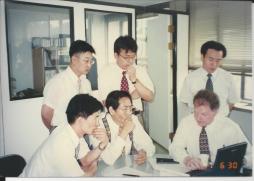
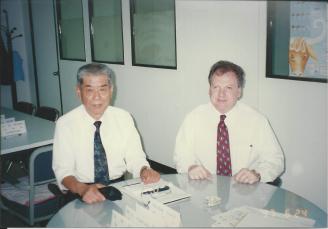
H.O. Lee and some guy

Our dealer in Seoul, H. O. Lee, had spent years building the relationships that made this project a reality. The Korean-based team consisted of engineers and project support people with backgrounds in Software, Systems, Data Management, and Operations. Most were Korean, some were Chinese, and all spoke some English. I had a high degree of confidence that we would work well together.

White Shirts and Bad Ties

I flew to Seoul for a week of intense review and refinement of the documentation that would guide the project and serve as the governance model for the engagement.

We powered through Day One, reviewing each section of the SOW. Day Two was more of the same. I was feeling great! On Day Three, a slightly apologetic H. O. Lee pulled me aside and said, in his soft sing-song voice: “Mike, we appreciate very much you coming to Seoul to teach us about the software and the inkjet printing and the file-based processing. Mike, we study English for years in school. But Mike, you talk so fast!!!! Please, SLOW DOWN!!!”

OK then… back to Page One…

Missed The Mark

scan

I didn’t read the room very well.

I didn’t do a good job of recognizing a significant problem with my style. My fellow team members hesitated to make me aware of the problem, which added to the stress they were feeling. H.O. Lee recognized the issues and, as a good leader should, brought it to my attention in a way that helped me to correct my approach.

We recovered from my failure to execute a basic responsibility, and, after several months of hard work, we completed our installation.

Use What We Learn

I carry this, and other hard lessons forward and try to not repeat past communication mistakes. I try to listen more closely. I ask more questions and then play the answers back to make sure that what I heard is what was said. Most importantly, I watch others closely to ensure that they are absorbing and understanding what is being discussed. These actions help everyone contribute to the discussion and make useful, informed decisions and take the steps that will deliver successful outcomes.

Then I go ahead and make all new mistakes!

You know, that sweatshirt isn’t going to keep you dry.

Words of wisdom from a local beer slinger.

Share this:

  • Click to print (Opens in new window) Print
  • Click to email a link to a friend (Opens in new window) Email
  • Click to share on X (Opens in new window) X
  • Click to share on LinkedIn (Opens in new window) LinkedIn
  • Click to share on Facebook (Opens in new window) Facebook
Like Loading...

Posted by Michael Calderwood | Filed under Cambria CCSD, Communicating, Community Involvement, Local politics, Searching for Cambria's Reality, Words matter

≈ 2 Comments

No Mothers – and No Bootsies!!!

30 Tuesday Oct 2018

Posted by Michael Calderwood in Local politics, Words matter

≈ 6 Comments

Andrews AvenueGrowing up in the Bronx was a lot of different things. Fun. Frightening. Rough. Loving. As crazy and unpredictable as urban life in the 60’s and 70’s could be, there were always rules. They weren’t written down, and they weren’t legally binding, but they were rules. Violating them could result in anything from exclusion to ridicule to, in extreme circumstances, a good beating. And that was just from the nuns!

Our Corner Of The World

The sprawling neighborhoods were rooted in groups of friends. Some were seeded by shared addresses, a common Little League team, or similar heritages. Others, like mine, were cultivated by a love of music. Some of us fumbled our way through the first shaky chords on a crappy guitar. Others found their groove on a basement drum kit or discovered their true soul on the church organ. New friendships grew out of those circles, as cars and motorcycles added to the list of passions. New introductions were made as sisters dated boys from a few blocks away. Part-time jobs connected us with people from exotic areas like Pelham Parkway and Far Rockaway.  Promises, hearts and the occasional bones were broken.

We Learn

Like kids, teens and young adults everywhere, we developed loyalties. We learned how to deal with differences. There were small spats and heated exchanges on the street or the basketball court, and as we became more familiar with the demon rum, in the drinking places and later the bars.

When we would hang around, busting balls and talking smack, things could sometimes escalate, with nobody wanting to back down, ever. Paul Lamacq, who lived in the next apartment building, would sense when the insults were getting out of hand, and would sternly say, “HEY! No mothers, and NO BOOTSIES!”  Bootsie was his mom’s little dog, who was often the subject of some amusement. Paul loved that dog as much as he loved his mother. So, when things got heated, the rule he invoked was simple. Fight all you want, but do not cross a line with words that can’t be taken back. Family, faith, anything that was personally painful or cruel stood out of bounds.

These Times

Today, over forty years removed, those core friendships still endure. Memories appear with an odd word, a faded picture, or a chance connection. A friend, out of touch for years, can call, and ten will answer.

As I  look across the tortured political climate that grips our country and our beautiful town, and I see and hear the hurtful things new friends and acquaintances say, I think to myself, No Mothers, No Bootsies.

Share this:

  • Click to print (Opens in new window) Print
  • Click to email a link to a friend (Opens in new window) Email
  • Click to share on X (Opens in new window) X
  • Click to share on LinkedIn (Opens in new window) LinkedIn
  • Click to share on Facebook (Opens in new window) Facebook
Like Loading...

​Now What?​

07 Sunday Oct 2018

Posted by Michael Calderwood in Cambria CCSD, Cambria Healthcare District, Cambria Schools, Coast Unified School District, Community Involvement, Local politics, Parcel Tax, Searching for Cambria's Reality, Words matter

≈ 7 Comments

Cambria. For a “sleepy little seaside community” there sure is a lot of churning going on. Given the range of Cambrians and Cambria-hopefuls, every public dollar that is raised and spent gets a lot of attention. Moreso, every agency and administrator tasked with delivering the services that those dollars are intended to support face ever-mounting public pressure. While the three agencies – the Community Services District, the Healthcare District, and the School District – operate independently of each other, the issues they deal with have similar drivers – taxpayers and ratepayers.

  • Rate increases for Water, Wastewater and the Sustainable/Emergency Water Facility have been under consideration, with a lot of heat and energy being generated to thwart them through a Proposition 218 protest. That protest effort was unsuccessful, falling short by over 700 protest submissions needed to deny the rate increases.
  •  The Healthcare District has put a measure on the November ballot that would, if successful, levy an additional $35 annually on parcels served by the district to fund needed improvements to the District’s infrastructure, mainly focused on ambulance and facilities needs. The measure was supported by four Board Trustees, with one abstention.
  • Three seats are up for grabs on the Healthcare District Board. Of the three incumbents, only one declared as a candidate for re-election.
  • Two of three eligible seats will be on the ballot for the Community Services District. One is held by an incumbent, the other will replace an outgoing Director who chose not to run for another term. The third position – a two-year term –  will remain with the currently serving director, as nobody other than the incumbent filed to run for that position.
  • The School District will not have an election, as nobody but the incumbents applied for the two seats.

It is a challenging time to be an elected member of any of the three main administrative organizations. It is even more dangerous being an administrator of one of these organizations.

  • CCSD General Manager – Dismissed
  • CCHD Administrator – Retiring under duress
  • School Superintendent – Leaving office in January

Ye true “Loyal Natives” attend to my song
In uproar and riot rejoice the night long;
From Envy and Hatred your corps is exempt,
But where is your shield from the darts of Contempt!

Robert Burns 1759 – 1796

Economics

The cost of Cambria living is pretty high, and the traditional working-class families that are the heart and soul of many communities are struggling to take root, or stay rooted in the area. Housing costs are up there for both buyers and renters. The inventory mix is split among primary homes, second homes, vacation rentals, and some multi-family residences. Missing from that list is a reasonable stock of affordable housing options. Hence, some families looking to establish roots are finding Cambria out of reach.

In another bucket –  an aging population, many retired, many still working in occupations that have either low or speculative incomes such as artists, musicians, and craftspeople. They are faced with a reality that warns they may no longer be able to stay in the community they have called home for many years.

There are, of course, many residents who are in stable financial positions. I see the continuum sort of like the Circle of Life.

CCSD

Logo with CCSD.PNGThe Community Services District continues to be an organization under attack, with the General Manager the focus of an escalating, and ultimately successful battle to separate him from his job.
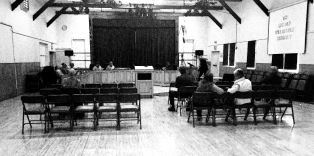
Some members of the community have been calling for his ouster, laying the blame for everything on his desk. Changes to the makeup of the Board of Directors gave the protesters a stronger voice behind the oak.

Messy

Some of the complaints are valid; mistakes in judgment have been made. Some of the issues could have been handled more skillfully.  But many of the problems Cambria face have very little to do with the GM’s job performance and a lot to do with circumstances he had been given to manage, often without clear direction from the board. And as always, not enough resources to fully attack the three billboards of under-funded projects that underpin the health and safety of the water and wastewater infrastructure.

After a flurry of Closed Session meetings – meetings that can generously be defined as sloppily arranged, noticed and reported, the General Manager and the Cambria Community Services District parted ways. The General Manager, Jerry Gruber, received a separation package consistent with the terms of his contract. This enraged some in the community, who believed that he should have been fired for cause.

Based on the lack of any formal performance metrics, evaluation process, corrective action plans and alignment of goals against district objectives, any other resolution would have been both unfair and imprudent.

A search for a replacement will be undertaken. Perhaps a re-examination of the job requirements might lead to a different approach to structuring the district administration. Is it a 1-person job? Are there candidates who really have all the skills and experience to manage a small but complicated community services district?

Personal

democracyFrom my back of the room perspective, I am both happy and sad that this situation has been resolved. It was clear that the relationship between Mr. Gruber and some members of the board was not good, and getting worse. Nobody was happy, and the longer it went, the uglier the dialog became.

The personal toll it was taking on Mr. Gruber, and his family was tough to watch. As his friend, I saw how it weighed on him. I also saw how he handled it with grace and professionalism. I was able to spend a bit of time with him as the curtain was being rung down, after the first closed session meeting where it was clear that change was imminent. He never said a bad thing about the board, the community or any individual, friend or foe. He pointed to his whiteboard and said he still had work to do, and he would report for duty and do his best until the clock ran out. Mistakes? Yes, mistakes were made, he agreed. Accomplishments? Yes, there were plenty, though often overshadowed by the voices of the perpetually pissed. Such is the life of any executive in any corporate or government agency.

I hope that, with some time and distance, everyone can find their way back to a less heated and more positive mindset. Some will, some won’t.

Friends, Romans, countrymen, lend me your ears;
I come to bury Caesar, not to praise him.
The evil that men do lives after them;
The good is oft interred with their bones;
So let it be with Caesar. The noble Brutus
Hath told you Caesar was ambitious:
If it were so, it was a grievous fault,
And grievously hath Caesar answer’d it.
Here, under leave of Brutus and the rest–
For Brutus is an honourable man;
So are they all, all honourable men–

From Julius Caesar, By William Shakespeare

RATES

Sometimes I wonder if I attend the same meetings as others in the community.

For the past five-plus years I’ve listened to presentation after presentation from the GM and staff, as well as committee members charged with studying rates and fees that fund the district’s deliverables. In chart after chart, key infrastructure projects have been identified, risks described, actions taken, improvements made and improvements deferred. Many of these presentations were accompanied by cautions that projects postponed or upgrades delayed would add to the growing danger to the systems that deliver our water and take away and process our waste. PowerPoint after PowerPoint showed failing components, as well as repairs and replacements that had occurred. In each instance, the GM, or a Director, made the point that we continued to fall behind and that the revenue that comes into the District is significantly less than what is required to maintain everything.

To sharpen my thinking, I reached out to accomplished leaders I have worked with through my career to see if they might have insights into this complex challenge. I was connected, through a mutual friend, to Susan Leal, a noted expert on environmental, legislative and global water and infrastructure issues. I gave her a brief description of the situation, and she graciously responded with a simple, yet clear truth.

“My guess is that the rate increases surrounding water and wastewater are difficult to swallow—especially after the rates have been frozen or otherwise not kept up with the cost of delivering service.  Management of wastewater is often more expensive than water supply especially when the infrastructure is old and in need of an upgrade. 
Bottom line: in California and in growing number of areas throughout the country: we need to use less water and be prepared to pay more for it. I know that’s not comforting, but that’s often the reality.”

Wait a minute – we have had rate increases for years. Where did that money go???

Never Enough

As pointed out numerous times, the increases that were put into place were too gentle. The sensitivity to the taxpayer/ratepayer wallet overshadowed the economics of providing the services. I am often perplexed as to why this tidbit is rarely mentioned in a rush to find malfeasance, misconduct, incompetence and a million other reasons for opposing what, to many are rational and needed increases. As we track the effects of the newly-approved rates, it might be a good idea to maintain awareness that, even with the new revenue, it will not be enough to fund all the identified needs.

Keep Listening

Despite falling significantly short of protests, a good number of ratepayers spoke out in opposition to the increases. Many feel that the district has been and continues to be fiscally mismanaged, and demand a better accounting of how ratepayer money is spent. Others objected due to the financial hardship the increases will have on them as they struggle to maintain a life in Cambria. All of these concerns need to be considered as we move forward, and it will not be an easy road to navigate unless all involved make a real effort to work together for solutions that equitably and practically benefit as many of us as possible.

Goodness

On the bright side, the recently – formed and empowered Finance and Infrastructure committees have been doing great work, really digging in and identifying areas of improvements to process, evaluation, tracking and reporting to the Board, and by extension to the community. The committee members are smart, committed and collaborative – a great example of citizens working towards improving rather than decrying Cambria’s governance. Their efforts, backed by a pledge to jealously oversee the fiscal management of the district, should make us all feel more confident that the health of the community will be fairly and objectively managed.

School District

img-logo3The Coast Unified schools are struggling. Depending on how one looks at the data, the schools are failing, really failing, or beyond all hope. A declining enrollment, fueled by the economic climate in town, is putting pressure on the district to balance everything from course offerings to staffing. This uncertainty is triggering a growing number of parents to move their kids to different schools, some private and some public. This is a tough choice for many, as the schools they are choosing are towns away. This often means travel expenses, tuition costs, and significant changes to the schedules of the parents and students. It also adds to the stigma, fair or unfair, of the Coast Union school system.

No Confidence

The School Superintendent has been under fire for her performance. She has been equally under fire for her compensation, which is quite healthy. Taken separately, both are problems for a small community with a changing school profile. Together, they form an obstacle that can’t be ignored. Add to this list a very public vote of “no confidence” by a near-unanimous roster of Cambria’s teachers.

Under significant public pressure led by concerned parents, teachers, and interested community members, the Board came to an agreement to end the relationship with the current Superintendent.

A search for a replacement will be undertaken. Perhaps a re-examination of the job requirements might lead to a different approach to structuring the district administration. Is it a 1-person job? Are there candidates who really have all the skills and experience to manage a small but complicated school system?

Healthcare District

headerOver the past few months, I’ve taken a semi-casual look at how the Healthcare District is run. I reached out to all the elected Trustees and asked a series of questions based on my simple understanding of the organization, and my perceptions of how they were operating as an elected board. I received replies from four of the five members. Each response had different degrees of detail, from very short and unhelpful to very detailed and thoughtful. Each respondent was careful to stay within the bounds of the Brown Act as it relates to privacy, confidentiality and the appearance of “serial meetings’ – meaning each response was singular and addressed to me only.
My second approach was outreach to the staff that manages the district. I sent a detailed letter to Administrator Sayers, which contained reasonably detailed questions driven by my observations and by questions, comments, and positions taken by community members, particularly three members of a citizen’s committee that worked closely with some of the Board on issues and opportunities around the fiscal management of the District. The three members of that committee are all running for Trustee positions in the upcoming election.

Mr. Sayers responded with excellent, detailed information, and answered the questions I posed as best he could, again within the bounds of confidentiality and privacy. I was able to follow up with more detailed questions based on his responses, and he continued to respond with information and feedback from other staff members. Mr. Sayers was open, honest and most importantly professional in the way he conducted the dialog.

Mr. Sayers will be leaving his position at the end of the year.

UPDATED 10/7 – Mr. Sayers has left the organization.

A search for a replacement will be undertaken. Perhaps a re-examination of the job requirements might lead to a different approach to structuring the district administration. Is it a 1-person job? Are there candidates who really have all the skills and experience to manage a small but complicated healthcare district?

Public Presentations

Before the upcoming election, the community will have had the opportunity to see and hear the candidates for both the Healthcare District and the Community Services District. Small, invite-only gatherings are being hosted by citizens and groups within the community for the various candidates. Larger, more formal events will feature the candidates in a managed and moderated setting. The public will have the opportunity to engage in the process.

The Healthcare District Forum was held in late September. The three challengers – Iggy Federoff, Laurie Moyer-Mileur, and Bill Rice joined incumbent candidate Bob Putney for a well-moderated session that gave each candidate the opportunity to define themselves and their positions. The event was well-attended and respectfully conducted.

The Community Services District Candidates – challengers Cindy Steidel, Dennis Perry, and Donn Howell will join appointed incumbent Aaron Wharton and write-in candidate Steve Kniffen for a two-hour event on Wednesday, October 10th. The forum will be moderated by the League of Women Voters and will take place at the Joslyn Center on Main Street. I am looking forward to the session, and expect it will also be well attended.

Cambria, anything but sleepy!

Share this:

  • Click to print (Opens in new window) Print
  • Click to email a link to a friend (Opens in new window) Email
  • Click to share on X (Opens in new window) X
  • Click to share on LinkedIn (Opens in new window) LinkedIn
  • Click to share on Facebook (Opens in new window) Facebook
Like Loading...

Quote

The Letter

26 Thursday Jul 2018

Posted by Michael Calderwood in Cambria CCSD, Cambria Fire Department, Community Involvement, Local politics, Measure A-18, Parcel Tax, Searching for Cambria's Reality, Social Media, Uncategorized

≈ 2 Comments

Tags

Amanda Rice, BlueCrest, Cambria, Cambria community services district, Cambria Fire Department, Community, Community Involvement, Emergency Services, Leadership, local board meetings, Parcel Taxes

I’m having one of those days where past and present seem to swim together, leaving little wakes that diverge and overlap, rising and falling in free form. I’m feeling like these should somehow be tied together in a story, but I’m kind of afraid of screwing it up by forcing these thoughts and feelings into combinations that sound right in theory but kinda suck in practice.

But that never stopped me before, so…

Then and Now

I was happy to see that the business I devoted a lot of my life’s second act to today emerged as a stand-alone enterprise, free from the constraints of a larger corporate brand that at times helped, but also hindered the healthy evolution of a premier brand in a niche industry.

Pitney Bowes Document Messaging Technologies is now BlueCrest, with a new brand, a new market freedom, and I am sure the same hungry spirit, staffed by creative, innovative technologists and thought leaders. 

Catching glimpses of familiar faces in tweets and press releases was a gift I wasn’t expecting. I am happy for them, and a little envious that I’m not there to experience their next successful chapter.

Go get’ em, BlueCrest!

Document Messaging Technologies-BlueCrest  

Leadership

Over the course of my career, I got to experience leadership in all shapes and styles. When I wandered into Danbury looking for a short-term temp job to help me support my family, (as playwright Robert Andersen once said, “you can make a killing but you can’t make a living in the theatre”) the production mail business was very small, and very much behind in the industry. That changed rapidly, driven by a team of brilliant designers, engineers, field service professionals and support groups that somehow managed to take what at the time was undisciplined, adventurous passion and energy and form a world-class organization.

Building that business required a leadership team that could harness the chaos, set big goals and motivate everyone to work together. They had to figure out how to deal with the brilliant, the stubborn, the dreamers and the grind it out-ers who had to come together to build the business.

From the outside, that leadership team may have looked just as diverse and disheveled as the rest of the workforce. But they were far from that. Today, as I sit in the back of the room watching and listening as our community leaders make sense of complicated issues, I find myself thinking about lessons I learned from those who mentored me. I remember things they said and did, things that are stored away in my mental file cabinet, available for revisiting and reuse.

Empowerment, Given And Taken

‘It’s your business, do what you think.’ Brian Baxendale, a gregarious and insightful leader, had the ability to see the potential capabilities of an employee and provide the right amount of permission tempered with the right amount of firm guidance. He remains an inspiration to many of us who got the chance to try things, to fail, and to try again.  

Cambria’s recent struggle with the issues around our Fire Department gave our community an opportunity to engage in passionate debate about how we view our world, and how we want to see it in the future. Cambria is rich in so many ways, but that richness doesn’t extend to the financial realities many of us face.  It has been interesting to observe and participate in the spirited discussions in support of or in opposition to a tax measure that would fund three firefighter positions. The conversations revealed more political and philosophical facets than I expected.

There were supporters of the measure who face real economic pressures, yet valued the service the firefighters bring to the community. There were those who feel the same economic pressures who opposed the measure because it would have a real impact on them. Many of us are staring at increased costs for all the services we rely on, with limited opportunities for a complimentary increase in personal income. There are people who are more financially secure who supported the measure because the tax would not cause them pain, and the additional capabilities were viewed as cheap insurance against a high-probability fire event. There were those similarly positioned who believe the extra manpower was unnecessary, as the coverage provided by both local and county/CalFire departments is more than sufficient. There are supporters who respond emotionally (“these are our guys!!!”) and detractors who see everything as corrupt and driven by greed (those bastards are at it again!!!)  And there are many, both supporters and opponents, who check some of the boxes in all of these categories.

A Loss

The reality though is that after all the tumult the measure was not successful. The supporters delivered a 54% tally, which fell considerably short of the required supermajority of 66%.  

Analysis of the outcome provided some insights, notably that within each area of Cambria those who voted – and voter turnout was not great – delivered a majority “yes” vote. Like they say, close only counts in horseshoes and hand grenades… but is there a message in the 54%, beyond just winning and losing?  

bigboard

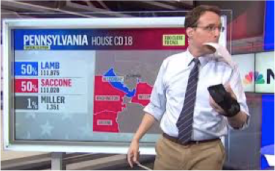
Can I get the Home Version of “Steve Kornacki’s Big Board”?

Informal polling, which has mainly been me asking people stuff, revealed that there was a real information gap in what the measure would do and how it would affect the fire services going forward. I was surprised to find that some folks thought the tax would add three additional members to the fire department. They did not realize that the defeat of the measure would result in the loss of three full-time professional firefighters. Of course, there were a lot of good, reasoned “no” votes, based on well-informed and considered rationale.

They Persisted

‘I’d like to try anyway.’   Ajay Ghia combined a studious, low-key approach with an unshakable determination to follow a course he knew was right. While presenting an acquisition recommendation to the corporate “C Suite” , he was met with a curt “you’re not going to convince me this is a good idea” from a notoriously difficult executive. After a beat Ajay replied, “I’d like to try anyway.” He then made a presentation that supported his position. The executive still did not agree, but he didn’t expressly kill the idea. Ajay and team went on to follow his strategy, the acquisition was made, and it became the platform for a series of systems that transformed the competitive landscape.

The members of the Cambria Fire Department are a determined and committed team who believe what they do is essential and critical to the health and safety of the community. They are also very dedicated to each other’s safety and success. As the community wrestled with the questions posed by Measure A-18, the firefighters continued to seek out ways to fund the three at-risk positions. The three firefighters had been hired under an earlier SAFER grant, which covered the cost for a period of two years. One of those efforts entailed applying for a second SAFER grant from FEMA.

Same Name, Different Rules

The difference between the first grant and the second grant is not trivial. Having seen the lack of follow-up from many communities who received the first round of grant funding, FEMA changed the rules and added a requirement that the governing agencies (CCSD) had to commit in writing to increasing levels of matching funds across the life of the award. This requirement raised the barrier to success considerably.   As opposed to the revenue A-18 would have provided, the cost of the match would fall to the CCSD, and by extension the community, with no additional revenue source to cover the expense.

Ready, Fire, Aim

‘Interesting, but Irrelevant’ Rick Jablonski, Sales Leader and strategist, would occasionally use this phrase when discussions would wander a bit and stall on issues that were tangential to the decisions that needed to be made. I find myself using it a lot lately.

Because the challenge wasn’t daunting enough, the staff report, required when matters are put before the board for consideration, contained a suggestion that funds currently directed to the support and maintenance of the Fiscalini Ranch might be redirected to the fire department. The funding deficit that would be then applied to the ranch would be filled by a potential parcel tax that would be dedicated to the ranch upkeep.

(Cue inspirational music)

The Fiscalini Ranch is a majestic oasis, with a history that in many ways defines Cambria.

20121002_123305

Note to self – remember sunscreen!

It means many things to many people, and there are community-based organizations that dedicate time and money to keep it safe and vital. Walking the bluff trail and sitting on one of the unique and beautiful benches is my version of going to church. 

I don’t quite know where that proposal came from, or how much thought went into the ramifications of proposing it in this context, but it sure landed with a big BOOM. Suggesting that taking steps to “unfriend” the Ranch stirred a response that filled the cozy meeting room with community members who likely would riot (politely and gently) should the suggested actions gain approval.

Reverberations!

‘Is this resonating?’ Bernie Gracy has been described as having “a brain the size of a small planet.” He was and is a tireless innovator with a passion for 100 + slide PowerPoint presentations, delivered with spell-binding energy and intelligence. He would always make sure to pause, wave his arm in front of the screen and ask the audience “is this resonating?”  A great reminder to validate that what we say is well understood.

This suggestion did two things; one positive and one amazingly damaging. On the positive side, the immediate and passionate response brought into crisp focus just how much the community will support and protect the Ranch. A smaller, though equally important effect, was carrying more of the community to the meeting, where they could see and hear the issues in person, and not have to rely on others, including me, to tell them what happened. Many of us who share our views and recollections do so through the lens of our own positions, which can unfairly shade the story as it is retold. A shining exception to that is Kathe Tanner, our long-serving journalist who has seen it all and told it all. Her report of the meeting was crisp, factual and spin-free.

The damaging part of the recommendation was that it cast the firefighters as villains, and gave fuel to opponents who had both subtly and overtly positioned them in that light throughout the discussion leading up to the June vote. That battle was pretty brutal, and the rank and file of our small but mighty fire department were put in the position to represent themselves in the debate.  They had the disadvantage of being firefighters and not accomplished debaters, opinion shapers, or skillful public commentators. Nor were they inclined to get down in the mud with some opponents filled with a weird rage built on a worldview that everything CCSD is corrupt, incompetent, greedy or otherwise evil. Instead, they had to make their case again, having seen the community not support their cause through the ballot box, yet facing what they believe is a serious staffing shortfall.

Facts and Reason

What was meant to be a simple, administrative and policy discussion to determine if the required letter of commitment should be issued quickly changed as the Board saw the furor the public release of the supporting staff report set off across the town. Board President Amanda Rice did an excellent job of setting the correct expectations for what was to be discussed and considered, and what was not to be considered. The ” not” was the linkage of Ranch funding to Firefighter funding, or any other method for funding the required grant match. The other members of the board added similar commentary, and also expressed a bit of discomfort with the inclusion of it in the report. This demonstration of leadership from the board went a long way towards averting unnecessary and destructive commentary from a rightfully upset gathering of citizens and Ranch lovers.

The Public, Speaking 

‘Here’s my sense of the thing…’was the signal that Karl Schumacher had finished his process of examining an issue and coming to a recommendation. This phrase artfully set the table for a well-reasoned and insightful answer rather than a partisan position. Amazingly effective and diplomatic.

Objections

With the floor open for public comment, community members shared their thoughts on the issue at hand. Most of the comments were in opposition to the request for commitment. Some arguments were made using perceived deficiencies and inaccuracies in the grant application, and the long-range financial impact the funding requirement would have on the fiscal health of the district. Issues raised also included the thought that the recent defeat of A-18 was a clear signal that the community had spoken and did not want tax dollars spent on funding the fire department positions. This position had been shared by a fair number of people on social media prior to the meeting.

Support

I spoke in favor of supporting the grant, sharing my belief that the staffing levels advocated by the fire department, and endorsed by every fire professional I had interviewed, were both sensible and necessary. I also shared my dismay at the proposal to take from Fiscalini and give to Fire Department, likening the use of that tactic to Fake News – tossing an incendiary topic into the middle of a serious issue, resulting in a splatter of shrapnel that causes injury to common sense and thoughtful discourse. I also made a pitch for treating those with opposing views, and in this particular situation our firefighters, with less disdain and more respect.  Cambria Health District Board President Jerry Wood, speaking as a private citizen, also voiced support for the measure.

Convincing

The most resonant and reasoned presentation came from Ted Siegler, a highly capable and respected community member with in-depth knowledge of the District’s financial condition as well as the working of the Fiscalini Ranch. Ted has served and continues to serve in leadership roles on multiple committees and boards, including the CCSD Finance Committee and Fiscalini Ranch organizations. I think I also saw him on the Senate Intelligence Committee and the House Armed Services committee, but that may have been different prominent white-haired guys.

Ted laid out a clear set of facts, challenged some of the numbers that were included in the staff report, and concluded with the position that due to the district’s fiscal condition it would be irresponsible to take on additional financial responsibilities with no offsetting increase in revenues. It was practically impossible, absent a purely emotional motivation, to disagree with his findings and recommendation.

Decision Time

The talking stick was returned to the board, and they had further discussion about what they were about to decide. Cambria Fire Captain and grant writer Emily Torlano answered questions and clarified some information about how the grant was written and submitted. She noted that there was a question in the grant application that asked if the agency would like to request a financial hardship waiver of the matching funds requirement. The decision to check “no” had been made based on previous practice and with the thought that checking “yes” might have a negative impact on the application. It should be noted that the grant application process was begun well before Measure A-18 was placed on the ballot – a reasonable action given the uncertainty of the funding options to maintain the three firefighters hired under the original grant.

Before voting, the question was raised whether the Grant Application could be amended to change the hardship checkbox to “yes.” It was clear that the vote was going to go against the request, and options including not responding at all, returning with a brief decline – to – commit funding letter, or something else that would have the same effect but not incur a red mark against Cambria should future grant opportunities arise. In the end, the language used in the letter articulated the reasons for the decision to not commit. They were: District’s uncertain financial condition, and the defeat of Measure A -18. 

Next 

The decision the board made, while disappointing to some of us, was the right one for the community. As messy as it got, the Board showed solid thinking, compassionate listening, and excellent, committed leadership. 

The firefighters were a bit disheartened, but I believe they left feeling they got a fair hearing from the board and most of the community. There is no gloating or complaining to be done here; there should be some comfort in knowing the process worked, our voices were heard, and our elected leaders did their job with intelligence, honesty, and fairness. I hope we take that forward with us as we steam full speed ahead into the next hurricane of rate increases and ambulance taxes.

UPDATE

Shortly after the decision was made to withdraw the grant application, the Cambria Fire Department was notified that their application had been approved and the grant awarded. They had to decline.

 Pat Carberry spent his professional life leading different functions with grace, wit and compassion. Pat was also a hard-nosed businessman when necessary. He served in Vietnam as an Army Green Beret, but rarely spoke about his service. Pat was famous for the “Letters From God” that he’d read at the retirement parties of fellow PB’ers. When it came time for him to retire, he took a very different approach. He spoke quietly, and shared, ‘I’ve seen the horrific things human beings have done to each other.” A pause, then he looked at each one of us and said “Love one another.’

Share this:

  • Click to print (Opens in new window) Print
  • Click to email a link to a friend (Opens in new window) Email
  • Click to share on X (Opens in new window) X
  • Click to share on LinkedIn (Opens in new window) LinkedIn
  • Click to share on Facebook (Opens in new window) Facebook
Like Loading...

Fire On The Hill

03 Sunday Jun 2018

Posted by Michael Calderwood in Cal Fire, Cambria CCSD, Cambria Fire Department, Community Involvement, Emergency Services, Local politics, Measure A-18, Parcel Tax, Searching for Cambria's Reality, Uncategorized, Words matter

≈ 5 Comments

Tags

Cal Fire, Cambria Fire Department, Community, Community Involvement, Emergency Services

Fire interrupted the May night, bringing the residents of a quietly beautiful neighborhood out to the street, fearful and perhaps momentarily confused by what they were seeing. A house, no, a home was glowing and snarling with the fury of a thousand nightmares. A neighbor, injured and in pain, seeks help as a disaster consumes her home. This drama unfolds in a community miles away from the towns that would come to help in times of crisis.

All times are from the official Incident Report. 

Tuesday, May 29, 2018.
Incident Number: 18-CASLU 005543
Incident Name: PINEWOOD
Event Number: 18007179

It Begins

1:28:56 AM – With a keystroke, an emergency operator connects to an incoming caller urgently reporting a fire in the Pine Knolls area of Cambria. The well-trained and alert operator takes in the information that sets an incident response in motion. 

05/29/2018 1:30:08 ROOF ON FIRE, CAN SEE IT FROM HER HOME, SOMEONE YELLING FOR HELP - from dispatch report

1:30: 28 AM– Based on the caller’s input, the operator executes the dispatch protocol, and the Emergency Services response begins.

On Duty
Cambria Fire Department’s “A” shift was halfway through a 48-hour shift. Under the command of Captain Emily Torlano, the team comprises Engineer Michael Burkey, SAFER Firefighter Ian Poelman, and Reserve Firefighter Tim Murdoch.

Their primary response unit, Engine 5792, was parked in the bay, ready to go. Additional response units include an older backup engine and a water tender, a critical resource in areas where water is not always readily available. An emergency response vehicle carrying the tools and technology needed to support the often dangerous response and rescue operations sits ready.

1:32:28 AM – Dispatch

Firefighter Ian Poelman walks through his response to the call.
“We had returned to the station about an hour earlier from a callout. I was in my assigned room, resting. We were in the middle of our 48-hour shift, so you grab what sleep you can. I heard the bells coming through the speaker in the room. The dispatcher’s tone was slightly more urgent than usual, and his report of a structure fire with a potential injury told me this was a serious incident. The team responded immediately, falling into the process we have learned. Dress and go. As we took our places on the engine, I reviewed my mental checklist of all the steps we would take during the response.”

1:33:53 AM – Engine en route

 “Our mobile GPS was launched, and maps popped up with a location and route. The incident response binder showed us the locations of nearby hydrants. Captain Torlano went through her routine, devising an initial plan based on her information. We train for these events, so the steps we take are familiar. But you don’t know everything until you get to the scene.”

1:40:56 AM – On Scene

The Captain describes the scene and her decision-making process.
“I was the incident commander. I did my walk-around, sized up the situation, and eliminated rescue. A neighbor, a nurse, is treating an injured resident, and I released the patient to the ambulance crew that had arrived on scene.”

1:42:52 AM – Cambria Healthcare District Ambulance on scene
1:43:58 AM – Patient Contact
1:53:10 AM – Patient Transport

Torlano continues. “Neighbors were yelling at us in distress as fire consumed the house and threatened their homes and the other precious exposures – the forest. After completing my walk-around, I report to dispatch we still don’t have water on the fire.”

Firefighter Poelman describes what the team was doing as Captain Torlano made her assessment.
“We located the nearest hydrant, and Firefighter Murdoch grabbed the hydrant bag from the back of the engine and began unreeling the 4″ line that would deliver water from the hydrant to the engine. He wrapped it around the hydrant and secured it. The truck then moved towards the fire, neatly spooling out the line. Murdoch readied the hydrant. Clear obstructions, remove the hydrant cap, open the valve and flush out debris. Close the valve, connect and secure the hose to the hydrant. Re-open the valve when the engine connects at the other end.”
Captain Torlano adds, “My firefighter at the hydrant is the one in-town reserve. He is like a Jedi – extremely knowledgeable and methodical. I am grateful he was there.”
With the 4″ line connected to the water source, it’s Engineer Michael Burkey’s turn.

Engineer

 As the Engineer on the crew, Michael Burkey’s responsibilities are critical and time-sensitive. He shares his view of the response.
“We knew the call was serious because the tones kept sounding, indicating a significant event requiring a significant response. As I drove the engine towards the fire, I recalled that I had been on this very street hours earlier responding to a medical assist call. We approached the intersection and got a good look at the fire cutting through the light fog and lighting up the night sky. Priority one was locating the hydrant and positioning the engine where we could deploy the supply line and tools quickly and safely. I then drove the engine towards the fire, stopping just forward of the house. This position gave us the best view of the scene and, more importantly, allowed us to lay out our lines cleanly without unnecessary obstacles. I secured the engine, chocking the front and back of the wheels. Then, I disconnected the end of the main supply line from its mooring and reattached it to the engine pump. I signaled Tim Murdoch that we were ready to receive water.”

 We all finish getting our scba’s on to protect our airways, and I notice there is still no water on the fire… the neighbors are getting anxious as am I… I see hands raised, yelling, fists- I have no more bodies…Captain Torlano

Let it flow

Connections are now complete, and Engineer Berkey has the engine’s pumping system charged, balanced, and ready to go. The Incident Commander instructs Burkey and Poelman to pull the 2.5″ diameter hose and begin attacking the fire. This particular hose can put out 500 gallons a minute at high velocity, and two people usually manage it, but nobody else was available then. Poelman deployed a “hotel coil” where the nozzle is fed under the coiled hose, and then the operator kneels on it to help control the powerful stream of water. Firefighter Poelman is, as some might describe, a strapping young man. The physical strength needed to manage this task is not trivial.
“Ian is our hero as he douses massive amounts of water on the fire. But the cooling does not squelch the flames as I had hoped…” Captain Torlano reports.

Situational Awareness 

Poelman realized he was not getting the best angle on the fire, so he repositioned himself closer to the flaming front of the house and re-engaged. He shares, “We’re trained to maintain situational awareness and not to get tunnel vision. It can be hard not to lock in on what is in front of you, with flames jumping out, wood popping and cracking, smoke and steam just feet away. Was it hot? I could feel the heat a bit through my boots and behind my mask.”

1:35:03 AM Cal Fire en route
1:42:01 AM Cal Fire on scene

The fire was blowing out the windows at the back of the house when Firefighters from Cal Fire Station 10 arrived on the scene. They quickly attached one of the 1.75″ hoses to the CFD engine and went down the side of the house to gain access to the rear of the building. They trained their hose on the fire, sandwiching the blaze between themselves and Poelman, who was still engaging from the front.  Engineer Burkey now has two active lines plus the intake hose to manage. Each line has different pressure levels to monitor. Burkey focuses on the controls, adjusting them as necessary to ensure the firefighters always have the proper water pressure to do the job.
“I knew the Cal Fire team was putting water on the fire when I saw steam rise over the roof where their attack met the flames,” Poelman recounts.
Captain Torlano adds, “They saved the two houses next door. It felt like hours, but it was maybe 10 minutes.”

Teamwork

The two engines worked in synchronicity and contained the fire safely from the exterior. Captain Torlano ordered Poelman and Murdoch to take up the second 1.75″ hose and enter the house from the front to continue the fight. The two men quickly connected the hose and did a “buddy check” to make sure they had all their gear securely in place and ready to go. With everything ready, they entered as the Cal Fire crew continued their efforts from the rear of the house.

As they entered, a combination of heated smoke, steam, and pockets of flame met them. They poured water on the fire, advancing steadily into the house, turning right towards the kitchen, where it seems the fire originated. They trained the hose on the ceiling over the stove, where flickering flames grabbed for something to burn.

Moving

With the flames extinguished, they heard the Incident Commander asking if they could find an entry into the adjacent garage, where the fire was still active. Smoke and steam made it difficult to see much, even as the two men got down close to the floor where the air was less dense. With no clear path to the garage, they backed out to see if they could gain access from the front of the garage. Unable to raise the locked door, they proceeded down the side of the structure, meeting up with the Cal Fire crew, who located an exterior door that led to the garage. They found and released the overhead latch, manually lifted the door, and vented the garage.

The interior crew did a primary search, confirming nobody else inside the house. They faced, as described by Captain Torlano, “a severely destroyed house, with huge amounts of damaged structural members, tangled wires; essentially a very fragile shell.”

“They brought out a photo album with burnt but salvageable photos and about five items of clothing… grasping to save something…” Capt. Emily Torlano

Support

As the incident progressed, more help arrived from the surrounding communities under the Mutual Aid agreements.

01:30:27 AM - Cal Fire Battalion Chief Dispatched
01:36:05 AM - en route
01:54:01 AM - on scene

Second engine requested by Cal Fire

01:52:34 AM – Cal Fire Headquarters Engine Dispatched
01:59:00 AM –Engine en route
2:20: 40 AM – Engine on scene

  Cayucos

1:30:27 AM – Cayucos Fire Dispatched
1:52:35 AM – Cayucos reports unable to find an operator 
for engine

 and Morro Bay

01:30:27 AM – Morro Bay Fire dispatched
01:34:56 AM – en route
02:01:24 AM – on scene

And from over the hill

01:30:28 AM – Templeton Fire Dispatched
01:36:37 AM - en route 
02:09:20 AM - on scene

 Logistics

 As the response continued, Captain Torlano dealt with real-time issues. The neighborhood sits near the top of a fairly steep hill, making it challenging for responding engines and support vehicles to get close to the fire. The street is one of the broader and well-maintained roads, but it quickly became tough to manage the logistics of each responding agency. The Morro Bay truck and crew had to park a distance away, then grab their tools and gear and walk the rest of the way to the scene, adding minutes to their response. They were assigned to work with the CFD team on the interior of the building. The joint team crawled through the attic – not the safest task, but critical in ensuring that the fire didn’t reappear later. Ian Poelman describes the combined efforts. “We continued to search out any pockets of fire that might still be burning. We used our tools to punch holes in the ceilings and the drywall, where fires can smolder undetected for some time. Tiring work, but that is what we train for – mentally and physically.” 

Just Breathe

The response team from Templeton provided a critical piece of equipment that allowed the firefighters to continue working safely. Their emergency vehicle carries “breathing support” – a system that refills the air bottles the responders use to breathe as they do their work. These bottles supply about 30 minutes of air and begin beeping as the remaining supply reaches a critical level. With this tone, the firefighters must withdraw and replace their air supply. The Templeton refill system allows for continuous and rapid resupply, keeping the firefighters in the game.

Even with this support, the firefighters are under significant physical duress. They take breaks to hydrate, rest, and check teammates to ensure they aren’t injured or unable to continue on the fire. This taxes resources and is an ever-present concern for all responders.

Winding Down 

The response continued for several hours. Constant check-ins revealed all personnel was accounted for and released as they completed their assignments. As 4 AM approached, most responders were on their way back to their stations.
The Cambria Fire Department remained on scene with their water tender to continue cleanup and monitor for potential flare-ups. 

11:34:30 AM – Cambria Water Tender released.

Time from the first contact to final scene departure – 10 hours, 6 minutes.

Back Home

 The fire was out, but the work continued for “A” shift. Far from taking a break, the crew went into the next phase of their job – cleanup and inspection.
During a fire, a host of substances fly everywhere, covering equipment, tools, protective gear, clothes, skin, and everything in between. Before leaving the scene, the crew strips off and bags their gear, keeping as many contaminants out of the truck as possible. Back at the firehouse, that gear goes to the laundry room – a simple term describing a complex decontamination process. Every piece is cleaned and checked before being put away. Each hose is unfolded, inspected for damage, pressure cleaned, and put back into proper position. They wash the engine and scrub the interior with decontamination solutions. 

The firefighters must shower to remove any grime and potentially harmful particles from the incident. They must also, within 24 hours, do one hour of strenuous, sweat-making exercise to help sweat out any potential carcinogens or other harmful matter. Another shower, then, if their shift has ended, they can relax. Or, if the shift continues, stay ready for the next call.

Coda 

“A” shift continued for another day. The team responded to an emergency cardiac distress medical call where Captain Torlano, a certified and licensed Paramedic, found herself cardioverting a patient – (shocking the heart out of lethal rhythm) as her SAFER firefighter, who is also a paramedic, began an IV. An ambulance arrived and transported the patient to the hospital, with the firefighter riding along to continue assisting.
And on it goes, day to day, shift to shift. 

Share this:

  • Click to print (Opens in new window) Print
  • Click to email a link to a friend (Opens in new window) Email
  • Click to share on X (Opens in new window) X
  • Click to share on LinkedIn (Opens in new window) LinkedIn
  • Click to share on Facebook (Opens in new window) Facebook
Like Loading...

“Catching the 1”

24 Thursday May 2018

Posted by Michael Calderwood in Cambria CCSD, Cambria Fire Department, Community Involvement, Emergency Services, Local politics, Measure A-18, Parcel Tax, Searching for Cambria's Reality, Uncategorized, Words matter

≈ 1 Comment

Tags

Cal Fire, Cambria, Cambria community services district, Cambria Fire Department, CCSD, Community, Community Involvement, Emergency Services, Parcel Taxes

Music has always been a big part of my life. I’ve spent large blocks of time engaged in the art, as a player, a composer, collaborator and always an appreciative consumer. It touches me all the time and is one of the biggest influences on my emotional health.
As a much younger person, I would occasionally do work around music, including a stint as a sound guy for a concert series at the Hammond Museum and Japanese Stroll Garden in North Salem, NY. The museum lives in a magnificent mansion that features a great room perfect for intimate events. The artists that perform in this beautiful house range from the exotic – visiting Japanese traditional musicians, dancers, and storytellers to Avant Garde musicians like composer David Amram. Two concerts stand out in my mind, and I think of them – and the lessons I took from them often.

Words…

The first mental memento features the songwriter, Bart Howard. He wrote a good number of “standards” that became staples of the cabaret/jazz/smoky hotel club scene. His most popular and successful composition can be heard on recordings by great saloon singers including Frank Sinatra and Tony Bennett, and by equally gifted singers from different genres, each interpreting the piece in their unique style. The song’s original title was “In Other Words.” It was soon changed to its more recognizable title “Fly Me to The Moon.” Sure, I’ll wait while you sing a few bars…
What sticks in my mind is not so much the song, but the story Bart Howard told. Even more than that, the way he performed it that afternoon. He was getting up there in age, and his voice, soft and polite, was at best passable; he hit the notes but struggled to hold them. He played the piano with elegance and wistful phrasing that painted a whole new picture. It was mesmerizing to hear that familiar love song shared by the person who wrote it, with the inflections and emphasis in places other singers missed. It was genuine, it was real, and it was pure art. I had a brief opportunity to chat with Mr. Howard after the show, and he was as kind, intelligent and engaging as his songs.
My lesson learned – anyone can interpret your words, thoughts, and ideas, but nobody can give it the same true meaning as the original.

Nat King Cole sings the standard, similar in style to Mr. Howard’s rendition.

…and Music

The second concert featured a name that most will recognize, spread across generations. Legendary composer/pianist Dave Brubeck passed along his gifts to his children, including sons Chris and Daniel, who performed their unique blend of sounds in a trio with brilliant jazz pianist Andy LaVerne. The musicianship was stunning, and what took it up a notch was the conversation with the audience, as Chris talked about the music, the inspiration and the unholy alliance of art and science, precision and free-form creativity. During one extended piece, each musician took a turn, soloing around and through the song structure. After a while I lost all count of the time, it was almost irrelevant. Then, as Daniel floated through an incredibly complex drum solo, BOOM – they all came together as one unit and took the tune to the end. After the applause died down, Chris spoke about what had transpired. He described the synchronicity as “catching the one” – meaning that through all the free flight of jazz improvisation, they all could come together on the downbeat – they all found the “1.”
Oh yeah, Dave Brubeck also sat in with his sons that afternoon.

Clip of the Brubeck Laverne Trio from the 1980’s

This lesson comes in handy in more than just musical situations. I look at it as a good reminder that every conversation, every issue, and every complex problem can take on a  fractal pattern, leaving an often morose Michael trying to remember what he was thinking about. Oh yeah – Measure A-18!

I’ve decided to vote in favor of Measure A-18. Coming to this decision was a surprisingly involved and at times confusing process that took me to all corners of the community.

Fairness

There are legitimate reasons to not like this measure. The tax itself is not, in my view, very fair. Parcel owners will be asked to pay the same amount of additional tax, whether their parcel is empty or full of house. Parcel owners who have little chance of building on their property will be asked to pay for something they may never get to enjoy. People who have multiple parcels will be taxed on each parcel. Parcel owners who do not live in Cambria will have no vote. People who live here and are registered to vote will have the power of the ballot, regardless of property ownership.
This issue, more than any other, held me back from a decision. In the end, I concluded that there might be different ways to split the tax baby, but there is no magic formula that will make everyone happy and whole. As for the argument that renter/residents get to vote to tax others – well, we live in America, don’t have landed gentry anymore, and as citizens, we have the right to cast votes on issues that impact the community we choose to call home. More than that, we have an obligation to use our vote wisely, for the benefit of all as best we can.

It Adds Up

The next issue that held me back is also tax-related. $62.15 a year does not seem like a big deal. But it is $62.15 on top of already meaningful taxes and assessments property owners pay. Utility rates have risen, and additional rate increases are on the table for consideration. The Health District struggles to remain solvent, and they are discussing another tax initiative to go before the community. This cost must be viewed as a part of a broader challenge.
My thought here is simple; we have to make a decision on what is in front of us now, and accept that the other two potential levies are not formed and not immediate. This decision has a deadline of June 5th.

Need

The third issue that I struggled with was determining the real need for the staffing that this measure will fund. There have been very strong and very weak arguments made on this critical issue. I spent most of my time sorting through this one. People I know and respect oppose the measure, and people I know and respect support the measure. I decided to go back to basics, follow my usual process and dig into each bullet on the list, from both sides.

Process

As my journey progressed, I was able to get face time and phone time with multiple people involved in the Emergency Services business that protect Cambria and the surrounding region. I asked what I believe to be tough questions – my own and those raised by various community members. I looked at statistics, read reports and visited with both Cambria Fire and Cal Fire. I spoke with CCSD staff and several elected Directors. I engaged in a detailed back and forth via email. To ensure I was as fair and unbiased as I reasonably could be, I asked a trusted friend to review (with permission) my discussions with the involved parties. I challenged the agencies, and suggested areas for improvement in their communications. They argued their points, adjusted their thinking, and built better arguments. Their initial efforts were not strongly formed or articulated, making their battle tougher than it needed to be.

Fair or Not?

The back and forth led to a few realizations. First, why has it been left to the line troops to fight this battle? It seems unfair. Secondly, they are firefighters, not politicians or lobbyists, yet they are acting in those capacities and taking the shots that come along with those roles.
In spite of all that, they continued with their efforts. The arguments improved. Communications were polished. They actively engaged and listened, responded with reasoned, fact-based information, and maintained their composure and their dignity.

Live and Local

Finally, the second community town hall convinced me that the firefighters’ positions are valid, the needs they have are legitimate, and the support they have received from other agencies, specifically, Cal Fire remains strong.

Beyond the Bullets

The speakers focused on the relevant theme – time and resources. They did a good job of taking the discussion beyond the top-level bullet points and drilled deeper into how the staffing model impacts not just fire response but all the other tasks and duties they perform. They provided real statistics on the decline of the “volunteer” force in Cambria and across the country. They defined – finally – what a volunteer is, and what is required of them to be eligible to serve in that capacity. They cited the law that made extensive training and certification mandatory. A point that they underplayed, but which caught my attention, was the overall effect of losing the three existing firefighter positions. It is an important point that becomes clearer when put into the context of what Cambria Fire and Emergency Services across the country face.

Quick Math

The current reality is that CFD engine is generally staffed with a captain/paramedic, an engineer, a firefighter and a reservist (the equivalent of a paid volunteer.) The reservist pool is pretty shallow, with two in-town qualified and trained people who may or may not be available to respond or pull shifts. With out-of-town reservists, that pool expands to 9 people, who may or may not be available when needed. So,if you subtract the third professional firefighter, then add the uncertainty of reservist availability, it is possible that the engine response team could be just two people. A likely scenario – no. A possible scenario – certainly.

And So…

The community members who attended were engaged, perhaps under-informed, but interested in hearing the arguments from all sides. I thought about the anger over the “fear tactics” being used to influence the community. At the end of the night, I sensed that given the realities of our environment, maybe a little fear is warranted. As I listened to the presenters and the attendees, I went through my list of questions, objections, and arguments and asked myself – were they addressed and answered successfully? For me, an overwhelming number of them were.

So I finally, after a lot of work, the issues came together and resolved in my mind. I “caught the 1.”

And now on to the next exciting movement. Maybe something in a waltz.

Share this:

  • Click to print (Opens in new window) Print
  • Click to email a link to a friend (Opens in new window) Email
  • Click to share on X (Opens in new window) X
  • Click to share on LinkedIn (Opens in new window) LinkedIn
  • Click to share on Facebook (Opens in new window) Facebook
Like Loading...

Telling Stories

21 Saturday Apr 2018

Posted by Michael Calderwood in Cambria CCSD, Cambria Fire Department, Community Involvement, Emergency Services, Local politics, Parcel Tax, Searching for Cambria's Reality, Uncategorized, Words matter

≈ 1 Comment

Tags

Cambria, Cambria community services district, Cambria Fire Department, Community Involvement, Emergency Services, local board meetings, Parcel Taxes

I was driving through town on a beautiful Monday morning, listening to the Bruce Springsteen channel on satellite radio. Youngstown, Bruce’s devastatingly accurate and stark telling of the rise and fall of the titular city, was playing. The version was from his haunting 1995 album “The Ghost of Tom Joad”, which was more of a folk/Americana record than a raucous and defiant rock barn burner.  Youngstown is Steinbeck with guitars and fiddles, even more so than the title track.

Youngstown – Original Version

As I listened, I made a mental leap to a very different telling of the same story – the version of Youngstown that appears on the Live From New York City DVD that was filmed for broadcast on HBO in 2000. Where the original has soft, insistent acoustic guitars and steady, almost shuffling accompaniment, the live version features the E Street Band at the apex of its incredible power. Where the original spools the story with melancholy and resignation, the live version spews it with a rage and denial.

In the first telling, I see a townsman sitting at the counter of the diner, both hands wrapped around the coffee cup gone cold as he tells the tale, flannel shirt over a worn t-shirt, old but still respectable jeans and work boots speaking a plain and honorable truth.

The second version reveals the same guy five years later, now seated at the dark end of the bar, hand squeezing the last drops of beer gone warm out of the brown bottle that will soon join a few too many in the bus box under the bar. Not so melancholy, not so quiet, telling anyone who wants to, or doesn’t want to hear how things were, and how things are. Rage, despair, puzzlement, and pleading done in a voice too loud, too challenging, and too painfully true. Where the original took us out with a sad and ominous violin melody, the live version exploded into the chaos and near mania of Nils Lofgren’s jaw-dropping guitar work. He grabs a beautiful melody and quickly hurls it away, replacing it with quick modal shifts and a machine-gun of notes. Each phrase sent speeding to the end of energy, and finally, exhausted, a repeating question mark of  “what has happened to my world?”

Youngstown – Live in NYC

Same words, same chords, same artist. Same story, different voices.

Local Accents

We often tell our stories based on what we want the outcome to be, and we use different voices to win the day. We do so with all the usual platitudes, like “it isn’t personal” knowing that for some it is very personal. Cambria, like many vibrant communities, is rich with stories. We are never at a loss for debates and decisions. A single simple issue rarely remains single or simple. Depending on who is telling and who is listening, and who is retelling their own version. Discuss sometimes turn to disgust. Some engage thoughtfully and positively. Others sit hawk-like on the overhead power lines, waiting for something to be turned into a meal.

Here’s One

Fire season no longer a predictable thing. Catastrophic fires and related events have been devastating large swaths of California and straining resources in every part of the state. Cambrians are being asked to fund three firefighter positions through a parcel tax. Voters will need to decide this issue and deserve to hear all sides of the equation. Here are a few duets from the greatest hits collection:


airquoteGOALS

 “Our goal is to continue to provide the best level of professional emergency services to the community we serve and meet the standards and objectives of fire service organizations across the country.”

“Their goal is to build an empire, take over all the emergency services, and keep the employees fat with overtime, outrageous pension benefits, and keep the union flush with dues.”

NEED 

“Cal Fire has a station in Cambria, and they respond to every call.”

“Cal Fire responds to every call when they are in the area and available, which is not always the case.”

“We get mutual aid responses from all the surrounding fire departments.”

 “Mutual aid agreements are critical to the safety of Cambria and the surrounding communities, though response times can vary and every minute is critical.”

COST

“Our goal is to create enough revenue to sustain these positions for the foreseeable future, and the tax model was built to meet that objective. Here, look at the calculations. “

“The sales pitch is built on misleading data – it is going to cost way more than they are saying – here, look at this chart!!!”

FEAR

“Their goal is to instill fear for the safety of our older citizens!!”

“Their goal is to instill economic fear and doubt among our older citizens!!”

“BE AFRAID. BE VERY AFRAID!!!”

OR…

Go to a meeting. Read some of the information provided by all interested parties. Think about what you can afford – afford to spend, and afford to lose. What level of risk is acceptable to you? What is won or lost with a yes or no vote? Check your gut, check your heart, check your wallet and check your moral compass. There are a lot of very smart, informed and interested people who can give us the data we seek, the detail we want, and the simple facts absent spin or partisan positioning. Facts are great.  Facts delivered with conclusions attached may be less clean, but if you trust the story-teller, well that counts for something. At the end of the day, it will be you and your #2 pencil (or more likely some sort of sharpie) hovering over the ballot. You and your vote matter.


Share this:

  • Click to print (Opens in new window) Print
  • Click to email a link to a friend (Opens in new window) Email
  • Click to share on X (Opens in new window) X
  • Click to share on LinkedIn (Opens in new window) LinkedIn
  • Click to share on Facebook (Opens in new window) Facebook
Like Loading...
← Older posts
Newer posts →

Subscribe

  • Entries (RSS)
  • Comments (RSS)

Archives

  • July 2025
  • May 2025
  • January 2025
  • November 2024
  • September 2024
  • August 2024
  • June 2024
  • April 2024
  • December 2023
  • November 2023
  • September 2023
  • July 2023
  • June 2023
  • April 2023
  • February 2023
  • January 2023
  • November 2022
  • October 2022
  • September 2022
  • August 2022
  • July 2022
  • June 2022
  • May 2022
  • April 2022
  • March 2022
  • February 2022
  • December 2021
  • November 2021
  • August 2021
  • July 2021
  • June 2021
  • May 2021
  • April 2021
  • March 2021
  • January 2021
  • December 2020
  • November 2020
  • October 2020
  • September 2020
  • August 2020
  • July 2020
  • June 2020
  • April 2020
  • February 2020
  • November 2019
  • October 2019
  • September 2019
  • August 2019
  • July 2019
  • May 2019
  • April 2019
  • March 2019
  • January 2019
  • November 2018
  • October 2018
  • July 2018
  • June 2018
  • May 2018
  • April 2018
  • March 2018
  • February 2018
  • November 2017
  • May 2017
  • February 2017
  • January 2017
  • December 2016
  • November 2016
  • October 2016
  • September 2016
  • August 2016
  • June 2016
  • May 2016
  • April 2016

Categories

  • 2024 Election
  • Art and Artists
  • Beautiful Cambria
    • Skate Park
  • Cal Fire
  • Cambria Fire Department
  • Cambria Healthcare District
  • Cambria Scarecrows
  • Cambria Schools
  • Catholic Faith
  • Clay Tiffany
  • Coast Unified School District
  • Communicating
  • Community Involvement
    • Cambria CCSD
    • Local politics
  • Dreams and Reality
  • Educating a Community
  • Emergency Preparedness
  • Emergency Services
  • Fordham University
  • Friendship
  • Funerals And Tradition
  • Glendora
  • God vs Country
  • Home
  • Homelessness
  • Humor
  • Living Our Values
  • Local Journalism
  • Measure A-18
  • Measure G-22
  • music
  • Music and Art
  • Parcel Tax
  • Perserverence
  • Photography and Memory
  • Prayer and Reality
  • Prop 218 Rate Increase
  • PROS Commision
  • Public Access Cable
  • Satire
  • Searching for Cambria's Reality
  • Social Media
  • Social Responsibility
  • Tolentine
  • Treasured Finds
  • Uncategorized
  • unity Broadcasts
  • Unusual Community Access Hosts
  • Words matter

Meta

  • Create account
  • Log in

Blog at WordPress.com.

  • Subscribe Subscribed
    • Thoughts From The Back Of The Room
    • Join 70 other subscribers
    • Already have a WordPress.com account? Log in now.
    • Thoughts From The Back Of The Room
    • Subscribe Subscribed
    • Sign up
    • Log in
    • Report this content
    • View site in Reader
    • Manage subscriptions
    • Collapse this bar
 

Loading Comments...
 

    %d