• Home
  • Melted and Molded
  • Apartment 3N
  • My Sister’s House
  • While She Is Away
  • The Final Telling
  • The Last Father’s Day
  • Watch The Rack
  • The Gathering Place
  • Photographs and Memory
  • Boy Meets Girl
  • Michael Calderwood

Thoughts From The Back Of The Room

~ Words Matter

Tag Archives: Greg Sanders

100 Days

04 Thursday May 2017

Posted by Michael Calderwood in Cambria CCSD, Community Involvement, Local politics, Searching for Cambria's Reality, Words matter

≈ 3 Comments

Tags

Amanda Rice Cambria, Cambria community services district, Gail Robinette, Greg Sanders, Harry Farmer, Jerry Gruber Cambria, Jim Bahringer Cambria, local board meetings, Mike Thompson Cambria

The Crazy Beauty of Democracy

Elections – our opportunity to make choices and vote our ideals. Or hearts.  Sometimes even our rational minds.  This past election season was certainly unlike anything we’d seen before.  And now we get to look back at the magical 100 days, and see what we have wrought!

Setting the Stage

Not everyone was happy.  No matter where one stood on the issues, the general sense was that some soon-to-be made choices would either lead to comfortable stability or radical change.  Some traditional affiliations held, but without the rock-solid surety of previous election seasons. New candidates emerged, familiar faces stepped up and fell back, and in the end, it came down to two.  One, a familiar and often scrutinized woman with a long and laudable record of public service.  The other, a man of some celebrity, known for things other than a firm grasp on the intricacies of complex and serious governmental process and responsibility.  Both had ardent and vocal supporters.  Both had detractors.  Both stepped forward and spoke of their vision for the future.  They were different, very different.

The campaigns rolled on, the candidates leaned on their respective bases for the votes needed to win the election.  Most observers thought that she would succeed. Her popularity wasn’t as solid and enthusiastic as it might have been; she had been urged to lean in a bit harder and expand her support, but she stayed true to her strategy.

He was a wild card from the beginning.  Of course, there was a core group of passionate supporters who shared his views and attitudes.  There was also a growing distrust of the established government and of the established governors.  The vague discomfort grew into something stronger as the campaign season wore on.  More and more supporters of adjacent candidates turned to him, embracing his message.  A message that was often hard to figure out, and positions that were more sound byte and vague accusation than firm and verifiable policy positions and governing platforms.  It was all, “They’re bad, I’m not” and, “There’s something going on here and I can stop it” slugs.

We all know how that turned out.

Raise your Hand and Repeat…

The oath of office was administered.  Some thoughts at the time:

“Well, he won on a wave of passion and desire for something other than the same old, same old… but running for the office and actually being in the office are very different things. He will realize how complex and difficult the role is, and will become more serious about doing the job. There is no way he will continue to pepper other government representatives with vague accusations of corruption, incompetence and elitism… no way he will remain under-educated about how the government works, how public service differs from public criticism, how the mechanics of public budgets and finance differ from simpler tasks of personal financial management…  how public works differ from private enterprise, even when both are technically complex.  He will grow and mature, and recognize that the words he used as a private citizen with little public accountability must be delivered more thoughtfully and with greater precision when holding the public trust. He will recognize that the other elected representatives are there, as he is there, through the will of the people… he will not need to embrace them, but he will need to work with them in a trusted and professional manner…”

Compromisers may not make great heroes, but they do make great democracies.

Walter Isaacson, writing about Benjamin Franklin and the Founding Fathers

Showtime

So the clock ticks, and the official record begins. His knowledge is on public display.  His questions are now coming from a position of responsibility, and what was ok before is now not so okay.  Expectations are higher.  Skills are expected to sharpen.  Efforts to become more expert in key areas have to be made, and results have to be measurable.  Careless and inflammatory remarks made as a private citizen, or as a populist candidate, now have to be challenged more quickly and more forcefully.  Attacking others, no matter how “benignly” will draw return fire; he can’t be surprised by it nor unduly offended.  This isn’t a game, its people’s lives.

Survey Says…

The maturity has not happened.  His questions and public comments remain, at best, difficult to follow.  The go-to move of repeating the vague accusations and suspicions that enthralled his supporters during the campaign just don’t pass muster now.  Certainly, many of his base still cheer him on and marvel at his courage and “stick it to the establishment”  attitude.  Great.  Fantastic.  Unbelievable, believe me.

I don’t, and here’s why.

It is easy to declare one’s intention to “bring people together” and “heal the divides that separate us”. But, with every comment to a reporter, every broadcast interview, and every indolent repetition of the same old lines, bridges erode.

Every repeated, simplistic analogy is evidence of a closed mind.

Every play to the base is a missed opportunity for wider connections.

The true test of leadership arrives; the opportunity to really listen, digest and incorporate information and develop a better understanding – well, still waiting.

The hundred day mark has been reached.  From where I sit things have gone badly.  Sorry, Harry, but that’s my thought from the back of the room.


Share this:

  • Click to print (Opens in new window) Print
  • Click to email a link to a friend (Opens in new window) Email
  • Click to share on X (Opens in new window) X
  • Click to share on LinkedIn (Opens in new window) LinkedIn
  • Click to share on Facebook (Opens in new window) Facebook
Like Loading...

Tough Slog

28 Tuesday Feb 2017

Posted by Michael Calderwood in Cambria CCSD, Community Involvement, Local politics, Searching for Cambria's Reality, Words matter

≈ 3 Comments

Tags

Amanda Rice, Cambria, Cambria community services district, CCSD, Greg Sanders, Harry Farmer, Jerry Gruber Cambria, Jim Bahringer Cambria, local board meetings, Mike Thompson Cambria

Water, Water Everywhere

It certainly has been a challenging few weeks for the Cambria Community Services District employees.  They’ve been inundated from every possible direction, with never-ending rain straining every resource. From the well fields to the brine pond, water, water everywhere.  The town, the surrounding hills, the beaches and the roads were assaulted by blessed and cursed rain.  It was all hands on a flooded deck.   Danger. A slip, a missed step, a falling tree, or a power line.  Look left, get pummelled from the right.  Miss something over there while trying to fix something over here, and bad things can happen. 

At the same time, the CSD staff leadership was under a different deluge – one of warnings and eventually notices of violation from the Central Coast Regional Water Quality Control Board.  Some of these issues overlapped, with the rains exacerbating the strain and driving serious and consequential real-time decision-making, each choice the best that could be made, knowing that the downside of other things put aside could come back to haunt.  There is real danger in these times.

Pick up a shovel or spreadsheet?  Answer a public request or comply with an agency requirement?  Ensure safety or ensure administrative compliance?  Ask for help or ask forgiveness?  Whatever call is made, another one will be made by someone else. Such is a life in public service.  Plenty of support when someone gets hurt, and plenty of told-you so’s when someone comes up short.

Suspicion is the companion of mean souls, and the bane of all good society. Thomas Paine

Extra, Extra!!!

In the weeks since the last Board meeting, the Central Coast Regional Water Quality Control Board sent Notices of Violation to the CCSD.  Each notice contained specific complaints, and each listed infraction carried the potential for fines; the number of instances times the dollar amounts per violation quickly added up to a theoretical fine closing in on $600,000.00 all in.  Startling, disturbing and definitely eye-catching.  Which is why the headlines led with it in one form or another.  Not Fake News, but certainly tone-setting.

A careful reading of the credible news articles revealed a more detailed and nuanced view of the situation. The vast majority of the violations were administrative – late or incomplete reports being the main bloc of issues.  The reporting requirements placed on the CSD are not trivial; some would argue they are close to punitive.  The reports seem to be required so the Water Board and other oversight agencies can monitor and manage any potential issues that could compromise the health and safety of both citizens and the environment.  Important stuff, and each agency seems to take these data points very seriously.  Timeliness of the reports likely impact the reporting the respective agencies need to do, and on it goes.

A deeper dive into the reporting and updates from the involved parties reveal that the draconian tone of the notices (and the subsequent headlines) were meant to convey a message – “Hey, guys – we are very serious here.  Get it together fast!!!”  Further reading offered a more conciliatory and even encouraging posture from agency representatives.  While not absolution, it revealed a more pragmatic and less dramatic approach to solving the problems that drove the notices.

The General Manager acknowledged the violations, and accepted that he and his staff had to do much better to win the trust of the agencies and the public.  Significant progress has been made against the backlog of late reporting.  Root causes were identified, and process changes and personnel realignments were made to better manage the requirements going forward.

Still – those headlines!  The most extreme of the stories flew around Social Media like the winning Lottery numbers.  To some, I guess, there were.

Accountability

I never expect to see a perfect work from an imperfect man. – Alexander Hamilton

Throughout the onslaught, some very serious questions were raised around accountability.  There is no doubt that the General Manager is ultimately responsible for ensuring the CSD’s obligations are met. He’s The Guy.  Responsibilities for individual deliverables fall across different parts of the organization, and many are shared among different, interlocking functions, but when things go boom, people are looking for that “one throat to choke.”  He is the one who takes the beating, no matter how fair or unfair.  I think he accepts that responsibility, and so far he has stood up and taken the heat.  He also stood tall and apologized for his comments at an earlier meeting, directing his words to the individual he scuffled with and the agency he inaccurately represented. Most importantly, he has taken action to correct what needed correcting.  Still, there are members of the community who are demanding his head.  Some have been taking small snips, others flashing their blades wildly. Still others lay out stones in the road hoping he will stumble over one and knock his own head off.  Or lose his cool, speak out of turn, and force the hand of say, oversight agencies.

Others take a more measured view, shut out the noise, and deal with the facts.  Not a single dollar in fines has been levied based on the Notices Of Violation.  That could change, and maybe it could result in a significant fine.  Maybe there will be a nominal fine or penalty.  Maybe the oversight will be ramped up and the reporting requirements tightened.  Or maybe, with considered review, opportunities to reshape some of the requirements will make it easier to comply while maintaining the correct levels of safety and situational awareness.  I struggle to think of a reason an agency would severely punish a community for these types of infractions.  I wonder why some community members seem almost gleeful at the prospect.  Weird, right?

Abandonment

I’ll get you, my pretty, and your little dog too!  – Margaret Hamilton

You know what else is weird?  The incredible swiftness with which some loyal friends and supporters of the Board President tossed her under the Prius and sped away because she did not do their bidding.  She (GASP!!!!) voted the way she thought was best.  Well, hot damn!! I fear some people don’t quite know how representative government is supposed to work.  It is interesting  to see some of these folks go on about free and equal, but when they don’t get the specific actions they want they call for the overthrow of their own votes. To quote some bozo in Washington. “SAD!”

Unaccepted Answers

With every meeting and every conversation, it becomes clearer that no matter what the explanation, what the reasoning or what the evidence says, some  folks simply will not believe anything the Board says about the Sustainable Water Facility.  From the conditions that drove the rapid development and build out of the facility, to the funding of the project, the rebranding, and the current status, required changes and ongoing permitting, every position given by the Board is called into question by those who oppose the plant, along with pretty much everything else that is the District’s responsibility.  Every question has been answered, and just about ever answer has been rejected.  Short of allowing folks to place fingers in wounds nothing will change any mind.  This is really too bad.  But if the foundational mindset is that there never was an emergency and the facility was always intended to fuel growth, therefore everyone involved is corrupt and dishonest, this will never change.  It becomes a game of attrition.

I often question my own view of the facts, so I reach out to different members of the resistance to ask for a better understanding of their positions.  Results have been mixed, with some good, open and civil conversations, and some sharp, “stick to the issues and “What do you not see?” retorts, as if coming to different conclusions somehow makes me a dullard.

Men often oppose a thing merely because they have had no agency in planning it, or because it may have been planned by those whom they dislike. – Alexander Hamilton

How Do We Listen?

There were a couple of real head-scratching exchanges during the last meeting.  They illustrate our collective differences in how we listen, what we hear through our own filters and biases, and how we respond to what was said.  A few quick examples:

  • The GM went through, in some detail, the actions he and the staff have taken in response to the Notices of Violation.  He highlighted a few of the drivers that contributed to late reporting, including samples that are sent to different labs around the country, resulting in uneven and delayed results needed to populate the required reports.  He outlined the steps taken to remove this particular stumbling block; later, in public comment a citizen referred back to the GM’s comments as an example of finger-pointing and shifting blame.  Now, my initial reaction was “that’s not what I heard.” Director Bahringer’s response confirmed my take on what was said.
  • Another citizen (and prior candidate for a Board seat) spoke about the loan agreement that funded a large part of the facility, saying we have “hocked everything we own…”and painted a dire picture of having everything in town seized if we default.  I wonder if he read a different loan agreement, because I didn’t see anything like that in the one I read.
  • A third example was an exchange between Directors Farmer and Sanders regarding the work needed to be done to complete the EIR.  Director Sanders shared his experienced opinion that documents like the EIR often go through a complicated response process, and at times the information that agencies have requested in their review comments are already in the document, and could be found by a more careful review of the data provided.  Director Farmer replayed that back as Director Sanders blaming the Agencies for not doing a good job, rather than the original EIR document being flawed.  Certainly not what I heard Director Sanders say, but that’s how Director Farmer heard it.
  • The last example of what was said versus what was heard – in discussing the excess water in the brine pond, the GM outlined a plan that is under consideration, pending approval and permitting from the appropriate agencies.  That plan includes draining much of the rain and floodwaters out of the pond and into nearby fields, lowering the content of the pond to safe, compliant levels.  The second piece of the puzzle would be the ongoing removal of the brine produced by the SWF.  This would entail pumping the brine into tankers and trucking it south to a facility that would dispose of it safely.  The General Manager did some quick math, and estimated that taking everything currently in the brine pond, pumping and trucking it out could cost around a million dollars, and that clearly was not a feasible solution.  This was relayed back to me in an email as  “The estimate at the meeting was at least $1 million to dispose of what’s there now. “

Perhaps these few examples can highlight why it might be helpful to take a minute or two, think about what we hear, ask clarifying questions, or even replay a recording to validate our thoughts.  However, if we all go into a situation with set jaws and contentious minds, not much will change.  A war of attrition.

Still a man hears what he wants to hear, and disregards the rest – Paul Simon

Once Upon A Time

A friend shared with me an article by Nathan Welton from July 2004, detailing the multiple environmental groups who engaged in the battles over the Hearst development efforts. I was struck by the sheer number of different and overlapping groups, and the fractures and tensions among them as they battled to find a common voice.

This section caught my attention: “Leading up to that event was raucous name-calling littering editorial pages — one recent letter painted North Coast county supervisor Shirley Bianchi “a wholly owned subsidiary of the Hearst Corp.” for her support of the current preservation and development plan.”

“Meanwhile, a former adviser to the Environmental Defense Center has admonished the group for having the temerity to make a public request for documents related to the Hearst deal.”

“And Sierra Club officials are threatening to kick local board member Tim O’Keefe out of the organization for publicly airing his differences over Hearst.”

Turn on a trusted and dedicated public figure – check.

Get mad about public document requests – check.

Exile individuals for airing differences of opinion – check.

The more things change…

Share this:

  • Click to print (Opens in new window) Print
  • Click to email a link to a friend (Opens in new window) Email
  • Click to share on X (Opens in new window) X
  • Click to share on LinkedIn (Opens in new window) LinkedIn
  • Click to share on Facebook (Opens in new window) Facebook
Like Loading...

As the kids say, “I just can’t….”

25 Wednesday Jan 2017

Posted by Michael Calderwood in Cambria CCSD, Community Involvement, Local politics, Searching for Cambria's Reality, Uncategorized, Words matter

≈ 2 Comments

Tags

Amanda Rice, Amanda Rice Cambria, Cambria, Cambria community services district, CCSD, Greg Sanders, Greg Sanders Cambria, Harry Farmer, Jerry Gruber Cambria, Jim Bahringer Cambria, local board meetings, Mike Thompson Cambria

Where do I begin…

I’ve taken a little more time than usual to capture my thoughts from the January CCSD meeting. I was so – I don’t know – confused, disheartened, bemused, all of the above when I left that I really had a hard time sorting through it all. It was such a strange and unsettling meeting that I actually went to the video tape and watched the whole thing again, wanting to be sure my initial reaction wasn’t due to the weather. It wasn’t; this meeting was a mess.  A quick look at the agenda didn’t reveal anything controversial, and my sense was that it should be a pretty crisp meeting. Boy, was I wrong.

It doesn’t matter how fair and balanced I try to be with this one. I’m bummed that our most critical local government function went all Humpty Dumpty.

If you could see her through my eyes…” Cabaret

Let’s go to the video tape…

It might be a good idea for every Director, Staff  member and public speaker to watch the entire 4 hours and thirty-nine minutes of this session so they can see what we the people see from the audience.  It could  offer some insights as to where behavioral changes might result in a better, more productive and positive collaborative enterprise.

HERE’S A LINK TO THE REPLAY

So why the long face?

After thinking about it for a few days I’ve come to the belief that the behaviors exhibited in the meetings are more the result of issues that take place outside the Vet’s Hall, and build to a point that explode during a public meeting.  Let’s start with Public Comment. It seems like it has become a game of dueling speakers. One gets up to speak negatively about the Board, the staff, and actions taken or not taken. The next speaker gets up to defend the board, the staff and actions taken or not taken. It’s like a slow game of tennis, but you get to sit down after each stroke.

It took me a while to figure out what one speaker was talking about. Survey equipment or surveillance equipment?  A man with a dog? Two men in hazmat vests? Routine surveillance? What is this, an episode of the X Files? Photographic evidence showed surveyor’s levels, but no surveillance equipment. Or hazmat vests. Or a pickup truck. Or the man on the grassy knoll. Weird, but definitely the CSD’s fault. I’m still not sure what that was all about, or why it was an issue for the Board.

The interaction between the General Manager and Citizen Dickason was embarrassing. It went from Jerry Gruber to Jerry Springer, with both sides hitting  the “I DON’T TRUST YOU!!!!!  WELL I DON”T TRUST YOU EITHER!!!!! duet like veteran community theater actors.

New Direction?

With the elevation of Director Rice, I expected that there would be some differences in how the meetings would be run.  Community members have expressed unhappiness over the length of the meetings. President Rice on several occasions stated that she would like to see them take less time. In her first full meeting with the gavel, she brought this baby in at a crisp four hours and thirty-nine minutes plus a few seconds. There was much shifting from side to side in the folding chairs. A good chunk of time was spent on President Rice going through her proposed goals and objectives for the coming year. Perhaps a review of the meeting recording could help her identify where clear thought and word economy might move things forward at a more reasonable pace.

There seemed to be a marked change on how dialog around public comment would be handled. The combination of Brown Act requirements and CCSD Bylaws set a general framework for allowable interaction. Directors have the option of giving short responses to speaker questions, and to ask short questions of the speaker for clarity or amplification. In past meetings these exchanges were few, and generally brief. In this session, debates seemed to break out all over the place, and, in several instances, Directors had terse exchanges with speakers, the audience and each other.

New President

On multiple occasions the President made what I consider to be inappropriate or poorly thought out comments to the General Manager. Putting aside the battle between GM Gruber and Citizen Dickason, I was stunned by the way President Rice handled two issues.

I am of the mind that an employee, no matter how high they are in the organization, should not be dressed down, have their competence questioned or otherwise undermined in a public meeting by a Board Director or Officer.

The fault, dear Brutus, is not in our stars, But in ourselves, that we are underlings.”    From The Tragedy of Julius Caesar by William Shakespeare

Additionally, it is, in my view, inappropriate for a Director, let alone the Board President, to publicly accuse or imply that a business or organization doing work with the CCSD is behaving unethically.  The comments by President Rice and Director Farmer in relation to the CDM Smith task orders were painful to hear, and based on my experience, reflected a real lack of understanding of how projects like the Sustainable Water Facility are managed.  Consulting firms do not exist to do favors – heck, they would go out of business pretty quickly if they gave away their services.  These services have real value, and require real work by real people with deep expertise to achieve complex objectives.  The whole process of designing and executing a complex technical project demands clear requirements and deliverables; it also requires a robust change -management methodology, which covers expanded requirements, changes to project scope, additional services required (time, materials, expertise, support…).  The methodology usually outlines what steps are to be taken to define the  scope of any change, why the change is needed, who is responsible for the change, and what costs, if any, are projected to be required for the change.  To have public officials imply that the consulting firm is acting in bad faith – “they know we have this money…” is not cool.  Telling the General Manager that you think he did a poor job in negotiating the changes is at a minimum in poor taste and shows a real lack of leadership.  Comparing the execution of the complex project to building a house, and telling the consultant tough – the rest of the work will be on their dime – may seem like a popular posture but is actually pretty ignorant.

What good is sitting alone in your room… Cabaret

Some suggestions

General Manager Gruber expressed the desire to file requests for information from all of the agencies he believes are being hectored by members of the community.  He has stated a belief that the impact to the staffs of these agencies, including the CSD, is significant in cost and operational effectiveness.  He also stated that these constant filings (and other contacts) are seriously undermining the reputation and credibility of the District.  He also believes some of these efforts are deliberate tactics by some groups to cause the SWF project to fail.

OK, if these assertions are true, I would support an effort to prove them.  File the requests, collect the data, put together a process to translate these situations into real costs – with some reasonable calculations that would give the Board and the community a fair sense of the size and impact of these issues.  If it turns out that they do, in fact, have a measurable impact on the District, it should be reported on, just like a failed piece of equipment, an infrastructure emergency, a vehicle replacement or any other expense or activity that impacts the District’s ability to do business.

And, if this all proves out, what action could or should be taken to address the specific identified problems?  Will the individuals or groups found to drive these problems change their views and alter their behaviors?  Based on initial reactions over the last few months that these charges have been surfacing, I doubt it.  Will the information galvanize the community to apply their voices in an effort to persuade?  Maybe, but to what effect?  Will the Board find a way to better dialog and support their responsibilities, or will they as individuals continue to root with their core constituents?    Based on this last meeting I have my doubts…

Come into the light

It is one thing for members of the community to make accusations of corruption, malfeasance, collusion, secret meetings and other nefarious goings on by Board members.  It is quite another to hear sitting Board members make similar veiled accusations against their colleagues, the firms that the CSD does business with, and other businesses and concerns in town.

If someone has an accusation to make – make it.  Publicly.  With facts.  Data.  Names. Specific actions or events.  Stop with the passive-aggressive, air-quote “many people are saying” type of nonsense.  Put it out there and be ready to prove it.  Save the suspicions, conspiracy theories and “alternative facts” for a different forum.  Decide if you want to be a grown up who takes the facts as they come or a partisan who takes the facts that they favor.

Make the meeting rules clear and stick to them.

Demand respectful behavior from everyone.

Correct errors and misinformation in a crisp, factual way.  When a speaker repeats false information – like how many hours CSD employees work – provide the data that clearly ends the debate.

Figure out a way to get the tough conversations done before or after a public meeting. Solve the conflicts before they hit the meeting floor.

It’s like raaa-aiiiiin on your meeting day…”

badly heard Alanis Morrisette lyric

Have a meter

One of the interesting things about attending the meeting twice was the opportunity to see it from different perspectives.  I generally sit in the last row so I can see, hear and observe the whole room.  Watching the replay gave me different views of the proceedings, and offered a few chuckles.

Watching the speakers queue up for their shot at the podium reminded me of shoppers looking for the fastest line at Costco.

Listening to a citizen address the Board and mention how a Director spent some time looking at his phone at the last meeting.  Watching the same citizen sitting in the audience reading the newspaper as other matters were discussed.

Having a citizen proclaim that the General Manager should be fired for his exchange with a speaker, and then stating that his assertions of harrassment were based on hearsay.  The citizen then continued with ” I heard it wasn’t even her… I heard it was someone else.”  uh, using hearsay to attack hearsay?  Have a meter!

hearsay – noun
  1. information received from other people that one cannot adequately substantiate; rumor.
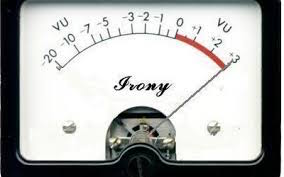
    irony

Share this:

  • Click to print (Opens in new window) Print
  • Click to email a link to a friend (Opens in new window) Email
  • Click to share on X (Opens in new window) X
  • Click to share on LinkedIn (Opens in new window) LinkedIn
  • Click to share on Facebook (Opens in new window) Facebook
Like Loading...

We The People

18 Sunday Dec 2016

Posted by Michael Calderwood in Cambria CCSD, Community Involvement, Local politics, Searching for Cambria's Reality, Words matter

≈ 2 Comments

Tags

Amanda Rice, Cambria, CCSD, Greg Sanders, Harry Farmer, Jerry Gruber Cambria, Jim Bahringer Cambria, Mike Thompson Cambria

Community

The period between Thanksgiving and New Year is one of increasing activity for everyone. In Cambria, that includes such traditional events as Hospitality Night, Friends of The Fiscalini Ranch “Songs For The Season” Fundraiser, the opening of the Cambria Christmas Market (which I believe can be seen from space) and Cambria Center For The Arts Theater’s delightful production of “It’s A Wonderful Life”, which is open to all free of charge. The weather is cooling, the shops are looking festive and the line at the Post Office has begun to double back on itself as holiday greetings arrive and depart and packages are lugged in and hauled out. The rotating faces of the homeless stationed outside remind me that we still have a way to go to make the season a little brighter for everyone.

Cambrians are many things, but at the top of that list sit the twin sisters of Kindness and Generosity. We may grumble a bit as we dig a little deeper to pay our water bill, but that grumbling doesn’t even think about making an appearance when we reach again for that ten or twenty dollars to hand to the volunteers lining the driveway circling the Vet’s Hall every time a community member is faced with a difficult and often tragic situation. The sudden unexpected loss of a beloved community member draws a congregation to mourn together, remember together and celebrate a life well lived, together. People truly care about each other around here; as good as it is, it ain’t the spaghetti that draws a crowd.

The community demonstrates caring in other ways, most visibly in the political process. There are thousands of people in the community, and a really impressive number participated in the recent election, with a registered voter participation rate in the neighborhood of 87%. The run-up to election day was crowded with candidate forums, small gatherings at citizen’s homes, discussions at the Farmer’s Market and everywhere people would meet. Everyone had an opinion, a favored candidate, and carried a burning platform. Lines were drawn, sides taken, divisions hardened. But really, how deep did the divide go? My guess is that there are a handful of diehards on every side, a larger number adjacent, and an even larger number right in the neutral zone; not uncaring, not uninvolved, not ambivalent. Just people who kept their humanity standing in front of their partisanship. It was pretty noisy, and kind of ugly at times, but we all had our chance to speak with our votes.

No Electoral College Needed

With the election behind us, I looked ahead to the December Board meeting, where the newly elected and re-elected Directors would take their seats at the podium.

One major item needed to be addressed at the top of the session – electing the President and Vice President who would lead the Board in the upcoming year. This was an event eagerly anticipated by much of the community, and there was a lot of energy around the topic in the weeks between the election and the session. As with many things, there was a lack of clarity as to how the process actually works. Many believed that there was a rotational policy, where the officers would rotate through their terms. A subset of this belief was that the sitting VP (assuming re-election or in this case, continuation of his elected term) would become president, and a new Vice President was to be elected. Others believed that everybody got a turn with the gavel. Many felt that it was only fair that a sitting Director who had served a full term, but who had not been given a turn in either position was “due”. This viewpoint had some additional merit since this Director was the top vote-getter in this election, as well as in her previous run.

Where’s the Rulebook?

I remembered a bit of a conversation I had with one of the Directors earlier in the year, and I believed I had a good understanding of the “rules” surrounding this process. I wanted to be sure I had it right, so I sent an email to the Directors and asked for clarification of the rules, and for any “color” they might want to add.

My Email: “I’m doing a bit of research for my next piece and was hoping you all could give me your quick view on the nomination and election of Board execs – President and Vice President.  There seems to be some confusion in the community about how that process works.  My understanding from what I’ve read and heard is that there is no official rule/policy/bylaw that mandates a change in officers.  There is a section on the CSD Website that says officers are chosen every year, but nothing that says “new” officers must be chosen. I’m trying to clearly separate the issues -what is “REQUIRED” versus what is “Past Practice” versus what is “Fair.”  There is a perception in some parts of the community that everybody should get a turn with the gavel; some believe that it is a requirement, others believe that is a customary practice, others believe it is a position that is earned.  So my simple (!) question – what is the current governing rule/regulation/bylaw that determines how these positions are filled? If you care to add any “color” to the response that would be helpful.”

 Within two days I received independent responses from Directors Sanders, Thompson and Rice. They agreed on the facts, and also gave some interesting background. They all agreed I could share their feedback.

 Greg Sanders: “Michael – the CCSD Board of Directors By-Laws, duly adopted by the Board, are very clear on the subject.  Section 1.4 of the By-Laws states as follows:

“The President and Vice President of the Board shall be elected annually at the first regular meeting in December and the term of office shall commence immediately upon election and continue until replaced.” 

That is the only provision of the By-Laws pertaining to the election of the President and Vice-President of the Board.  There is nothing in the By-Laws regarding rotation, etc. The Board is free to use any criteria it chooses to select a Board President and Vice-President.  The Board could, for example, decide immediately following an election that a candidate receiving the most votes should be selected as the President.  Or, the Board could choose to ignore the election and select a President and Vice-President on the basis of some other criteria, or no criteria at all.

He also added some historical perspective: In my service on the Board… there has been no particular pattern followed.  I served back-to-back terms as President of the Board in 2009 and 2010.  The Board wanted continuity at a time when some very significant issues were under consideration.  When I served from 2002-2010, Don Villeneuve, a fellow Board member, did not serve at any time as President.  As I recall, he did not serve as Vice President, either.  He resigned in 2008 (or thereabouts).

In my experience, selection of a Board President and Vice-President has been based on exigencies.  Ilan Funke-Bilu served as either Board President or Vice –President when the District was involved in litigation with Chevron Corp. over MTBE contamination of the Santa Rosa Creek aquifer.  He conducted most of the negotiations with Chevron.  Having a leadership position enhanced his position vis-à-vis Chevron.”

Mike Thompson: “Good afternoon Michael—-To avoid any possible Brown Act violation, I won’t cc any of the other individuals you queried. You are correct in assuming that there is no official rule/policy/bylaw regarding Board elections. The only requirement is the ability to count to three…in other words, it takes two members besides yourself to gain election. Last year Gail indicated a desire to continue in the chair to see through the process of applying for the permanent permit for the SWF. I and two others felt that was in the best interest of the District. In the recent past, Greg Sanders was President for two consecutive terms, so there is precedence.”

Amanda Rice: “The way boards choose their officers has always struck me as kind of an awkward situation, primarily due to Brown act restrictions about talking to other directors about certain business items. I can’t, for instance, talk to directors to try and find out if there’s a consensus about who should be president or vice president. There is no rule or law that requires the officers to ever change; as long as somebody is in office they can serve as president or vice president.

Besides there being nothing specific about “how” officers are rotated, there is nothing that bestows any additional powers or authorities to any individual board member, whether they are president, vice president or non-officer directors. The bylaws give the president the job of chairing… the meetings and to the vp in the president’s absence.

Amanda then added some interesting color: “Last year the bylaws were amended to give the president some additional authority:

  1. Designates or acts as a spokesperson for the board and a point person for gov’t relations.
  2. Makes appointments to all committees subject to board approval.
  3. May add an item to the agenda without the same required board majority of other directors. Can also approve the request of another director to add an item to the agenda, even without board majority.

The bylaws were also changed so that the general manager developed the agenda in cooperation with the president and vice president. Previously, the bylaws stated that the executive committee worked with the general manager to put together the agenda.

The bottom line is this – with the approval of the majority of the board, our bylaws give the president additional control of the direction of the board and therefore, of the district. I disagreed with the changes then. I disagree with them now. But they are the bylaws that I abide by as a director.”

So, one official bylaw.  No official “Rule.”  All for an office that has “no special power” except when it does.  Got it?  Good!

It was a blustery day in the hundred acre wood.
Fortunately, Pooh's thoughtful spot was in a sheltered 
place. Now he sat down and tried hard to think of 
something.
Winnie the Pooh: Think... think... think...
Gopher: Say, what's wrong, sonny? Got yourself a 
headache?
Winnie the Pooh: No, I was just thinking.
Gopher: That so? What about?
Winnie the Pooh: I... Oh, bother! You made me forget.

The Big Moment 

I was a few minutes late due to the big ass rainstorm that picked the right day to show up. Despite the weather, the Vet’s Hall was packed with people eager to have their voices heard. There was a lot of great energy in the joint – not all positive of course; I got the sense that many of the attendees were staunch supporters of Amanda Rice, and they were not convinced the Board would honor their wish and select her as the new president. And so we begin.

Vice President Thompson did an “LBJ’, indicating he would not accept if nominated and would not serve if elected. Newly elected Director Harry Farmer, in his best “slow-jamming the news” voice, nominated Amanda Rice to fill the office of President. Wild applause from the audience! Discussion followed. Director Jim Bahringer spoke. He said that the politically easy thing for him to do would be to support Amanda, but in his view Director Greg Sanders would be a better choice to lead the Board, given the circumstances and work to be done over the next year. He felt Amanda should be Vice President this year, and President in 2018. This did not go over very well with the attendees. Public comment was fiery, with pointed and passionate comments along with a reading of the will – of the people who signed a petition calling for Amanda’s ascension, complete with the petitioner’s written comments. The nomination was defeated 3-2. Director Bahringer then nominated Greg Sanders and Amanda Rice for President and Vice President. More discussion, with Director Rice giving her reasoning as to why she would be the right choice for President. More cries from the people, lots of angry faces, fully expecting their hopes for change to be crushed.

A vote was called on the Sanders/Rice ticket. Monique straightened her Christmas sweater and called the roll:

Director Bahringer – NO.

Director Sanders – NO.

Vice President Thompson – NO.

Director Rice – NO.

Director Farmer – NOOOOO.

What? WOW!!!!! He voted against his own nomination!?!? This was really fascinating – a ripped-from-the-pages of a political thriller screenplay. I scanned the room for Aaron Sorkin. He wasn’t there, so I scanned the room for Aaron Wharton, who also wasn’t there. No matter – the drama continued.

Director Bahringer then immediately nominated Director Rice for President. Monique, now at the edge of her seat, again called the roll. The vote – 5-0. Amanda was President. She immediately nominated Greg Sanders for Vice President. Again Monique cheerfully called the roll – again 5-0. The CCSD Board of Directors was ready to go.

Fast Forward

I know Kathe Tanner will report on the important discussions that followed, but I want to comment on the last Agenda item. A compensation increase for selected members of the CSD staff was put before the Board for a vote. The increase would be given in two steps in 2017. A 5.5% increase in January, a second 5.5% in June. At first blush an 11% increase is attention-grabbing and cause for serious discussion. The General Manager went through the reasoning behind the proposal, with one of the key points being very compelling to me. Over the last several years staffing levels have been reduced, with several positions eliminated and the attendant duties added to the responsibilities of the employees under discussion. So these positions carry more responsibility, and in my mind additional compensation should be given.

I understand arguing against the increases on financial grounds. I was distressed to hear that some members of the board and the public had views that were less than sensitive, culminating in a public comment that the employees “should be grateful they have a job.”

I continue to be confounded by the people who, in earlier public comment railed against the staff for not delivering information they have demanded (demands that add additional workload and are a time drain on an already overburdened team) are the same people who, in the same meeting, cried out loudly for “fairness” and  “doing the right thing” in the election of the Board President would speak so forcefully against showing “fairness” and “doing the right thing” for the employees who give more than what is reasonable in service to the community.

The board did the right thing and approved the compensation.

Happy Holidays.


Share this:

  • Click to print (Opens in new window) Print
  • Click to email a link to a friend (Opens in new window) Email
  • Click to share on X (Opens in new window) X
  • Click to share on LinkedIn (Opens in new window) LinkedIn
  • Click to share on Facebook (Opens in new window) Facebook
Like Loading...

I just went to pick up tomatoes!

23 Sunday Oct 2016

Posted by Michael Calderwood in Cambria CCSD, Community Involvement, Local politics, Searching for Cambria's Reality, Words matter

≈ 7 Comments

Tags

Amanda Rice, DeWayne Lee, Gail Robinette, Greg Sanders, Harry Farmer, Rev. Rod Richards, Tom Kirkey

The Question

My wife came home from church one morning and shared a simple question that struck a chord with her. It came from Reverend Rod Richards in a talk he had given that morning. The question – “How are we going to be?” I think about that a lot, and mentally apply it to the discussions I have with people who are asking us for their support.

Quick Recap (or “whaaaah, nobody listens to me!!!)

As I have mentioned before, I had submitted a list of questions crafted specifically for the challengers to CCSD Board who had declared and filed to be on the ballot. The goal was to gain insights into their top concerns, their depth of knowledge surrounding the major challenges we face as a community, their level of commitment to fully understand all of the moving parts that go into those issues, and their views on the pressures and provocations that members of the Board often face.

So – short story long – I got no responses. I followed up a few times with no results, but I’ve been able to catch up with some of the candidates in the parking lot of the Vet’s Hall.

The Talk

This week I approached Dewayne Lee, who was manning a spot in the middle of the Farmer’s Market Candidate’s Row with Tom Kirkey, Harry Farmer and Amanda Rice to his right, and Greg Sanders and Gail Robinette to his left. (To all my theater friends, that is Stage Right and Stage Left, respectively.)

The conversation began much like my earlier conversation with Tom Kirkey. I introduced myself and set the stage, recapping the sent questions/no response/follow-up/no response events. Dewayne indicated that he was not unwilling to talk, and gave several reasons as to why he didn’t respond to my written questions. He said “you have already made up your mind” and there was no reason to respond, and that the questions I posed would require detailed knowledge that only someone already on the Board would possess.

(To the first reason – in an earlier post, where I outlined my process for evaluating candidates I wrote “I don’t see the value of changing horses just because you can.” You can read the line in context HERE.  To the second –you can see the questions I posed HERE.)

We moved ahead with the conversation, and exchanged viewpoints on several of the details surrounding the EWS/SWF. We discussed some of the drivers around the need for a stable water supply, the process by which the current facility was selected and built, the costs – known and unknown around the plant’s continued operation, its use, and the long-term fiscal impact on Cambrians of decisions that have been made and will need to be made going forward.

The Interpretation

After some fairly intense discussion, I replayed what I believed I heard in order to not misrepresent his positions and reasoning. I’ll summarize them here.

  • He believes that the EIR should have been done before anything was built. For this reason he believes the current EIR process – review, identify environmental impact, take input, define remediation steps – is not proper.
  • He believes that the CCSD Board and Staff did not act appropriately when the project transitioned from The Emergency Water Supply to the Sustainable Water Facility.
  • He believes that any change from one to the other should be brought before the voters to decide on how the plant should be used.
  • He believes the “flaws” in the current plant design – specifically the brine pond/evaporation method – should have been foreseen and that bad engineering decisions were made. He believes that the discharge process is spreading toxic mist across the area and encroaching on the adjacent State Park.
  • He believes transitioning that brine pond to a water storage area is a good idea.
  • He believes that the CCSD Board and Staff are not answering questions about the long-term costs of dealing with environmental impacts (and in particular the removal of “unrecoverable” waste from the treatment process.)
  • He believes that the ad hoc committee process currently used does not give the public good insight and input into discussions and decisions that are made around critical issues. He believes that standing committees are a more appropriate way to get public involvement and oversight on Board decisions.

(note: both Dewayne and Andy Pickar, who joined us for part of the discussion, corrected my understanding of how ad hoc committees and standing committees work and differ.)

  • He believes, based on his personal review, that the public financial reporting is inaccurate and that the Board is not reflecting the true state of the district’s finances.
  • He believes that growth should be sensibly managed with all factors weighed before more building is allowed.
  • He believes that the public abuse of the Board (accusations of corruption, fraud, incompetence, personal attacks…) has at times gotten out of hand and is unacceptable.
  • He believes that he has the skills and experience to work positively with people of different viewpoints to get thing done.

There were a few more topics we discussed but I believe this list covers the most important ones we explored.

As always…

The candidate’s positions are theirs, and any questions about them should be directed to them. As I have said in previous postings, all of the candidates I have spoken with have invited the public to contact them directly if they want more information.

Final Thoughts

I’m looking forward to wrapping up my visits with the main candidates. Gail Robinette and I started a discussion that we hope to finish in the coming days. I’ve had a few failed attempts at conversation with Harry Farmer, so I don’t have anything more to add to his public comments at both forums and his published literature.

When I’m done perhaps I will have a better sense on how to answer the question “How are we going to be?”


Share this:

  • Click to print (Opens in new window) Print
  • Click to email a link to a friend (Opens in new window) Email
  • Click to share on X (Opens in new window) X
  • Click to share on LinkedIn (Opens in new window) LinkedIn
  • Click to share on Facebook (Opens in new window) Facebook
Like Loading...

Subscribe

  • Entries (RSS)
  • Comments (RSS)

Archives

  • July 2025
  • May 2025
  • January 2025
  • November 2024
  • September 2024
  • August 2024
  • June 2024
  • April 2024
  • December 2023
  • November 2023
  • September 2023
  • July 2023
  • June 2023
  • April 2023
  • February 2023
  • January 2023
  • November 2022
  • October 2022
  • September 2022
  • August 2022
  • July 2022
  • June 2022
  • May 2022
  • April 2022
  • March 2022
  • February 2022
  • December 2021
  • November 2021
  • August 2021
  • July 2021
  • June 2021
  • May 2021
  • April 2021
  • March 2021
  • January 2021
  • December 2020
  • November 2020
  • October 2020
  • September 2020
  • August 2020
  • July 2020
  • June 2020
  • April 2020
  • February 2020
  • November 2019
  • October 2019
  • September 2019
  • August 2019
  • July 2019
  • May 2019
  • April 2019
  • March 2019
  • January 2019
  • November 2018
  • October 2018
  • July 2018
  • June 2018
  • May 2018
  • April 2018
  • March 2018
  • February 2018
  • November 2017
  • May 2017
  • February 2017
  • January 2017
  • December 2016
  • November 2016
  • October 2016
  • September 2016
  • August 2016
  • June 2016
  • May 2016
  • April 2016

Categories

  • 2024 Election
  • Art and Artists
  • Beautiful Cambria
    • Skate Park
  • Cal Fire
  • Cambria Fire Department
  • Cambria Healthcare District
  • Cambria Scarecrows
  • Cambria Schools
  • Catholic Faith
  • Clay Tiffany
  • Coast Unified School District
  • Communicating
  • Community Involvement
    • Cambria CCSD
    • Local politics
  • Dreams and Reality
  • Educating a Community
  • Emergency Preparedness
  • Emergency Services
  • Fordham University
  • Friendship
  • Funerals And Tradition
  • Glendora
  • God vs Country
  • Home
  • Homelessness
  • Humor
  • Living Our Values
  • Local Journalism
  • Measure A-18
  • Measure G-22
  • music
  • Music and Art
  • Parcel Tax
  • Perserverence
  • Photography and Memory
  • Prayer and Reality
  • Prop 218 Rate Increase
  • PROS Commision
  • Public Access Cable
  • Satire
  • Searching for Cambria's Reality
  • Social Media
  • Social Responsibility
  • Tolentine
  • Treasured Finds
  • Uncategorized
  • unity Broadcasts
  • Unusual Community Access Hosts
  • Words matter

Meta

  • Create account
  • Log in

Blog at WordPress.com.

  • Subscribe Subscribed
    • Thoughts From The Back Of The Room
    • Join 70 other subscribers
    • Already have a WordPress.com account? Log in now.
    • Thoughts From The Back Of The Room
    • Subscribe Subscribed
    • Sign up
    • Log in
    • Report this content
    • View site in Reader
    • Manage subscriptions
    • Collapse this bar
 

Loading Comments...
 

    %d