Soul Searching

Tags

, ,

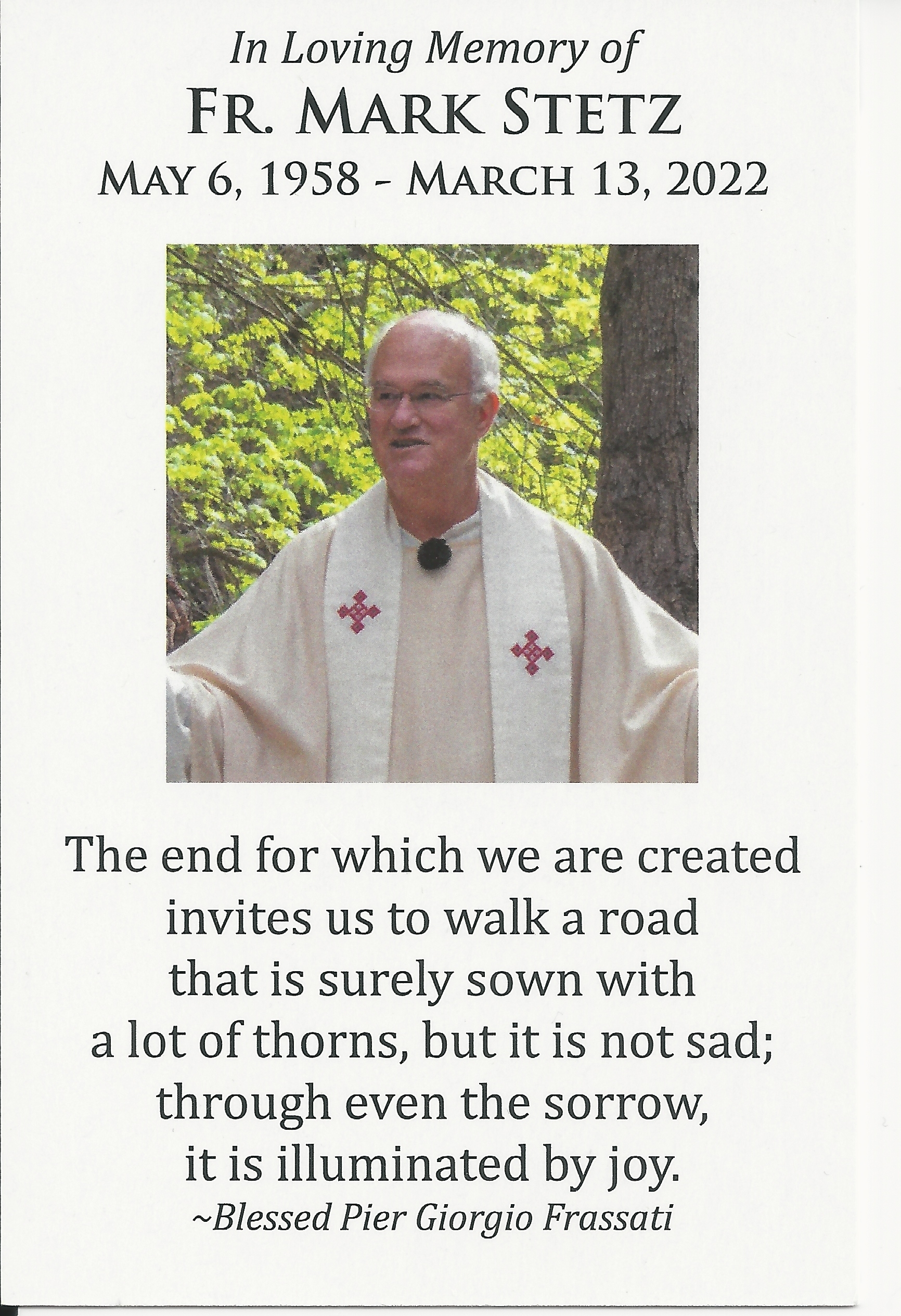
On a cool, windy, and sunny Thursday afternoon, my wife and I attended a Catholic funeral Mass for Father Mark Stetz, a beloved local priest who passed on, leaving a grieving flock and family to say goodbye. We went not as Catholics obeying tradition but in respect and appreciation for Father Mark’s good heart and his values-driven life of service.


The church filled beyond its three-hundred seat capacity. Sixty-eight priests and bishops and a convent of nuns occupied a good portion of the pews. A dark-suited bouncer patrolled the entrance lest an un-anointed muckety-muck try to sneak a seat inside the crowded building. Though the Gospels tell us “the least shall be first,” the VIP section and reserved seating said something different.


The sidewalks leading up to the main entrance bloomed with rows of white folding chairs filled with friends and parish faithful saying farewell to the good Father. Suits and ties mixed with jeans and work shirts. English and Spanish voices blended in song and prayer, and the church musicians, minus my favorite mandolin player, filled the spaces with joy, sorrow, and a message of hope.


As an escaped Catholic, I engaged in the service from an emotional distance. My mind drifted from the present to past Catholic funerals, some held in my old Bronx parish of Saint Nicholas of Tolentine, others across the tri-state region of New York, Connecticut, and New Jersey. Some were for my family members, from grandparents, parents, aunts, and uncles, to my beloved younger sister Anne Marie, whose death at thirty-two had a significant impact on changing my life. Her funeral, held just a few short months after my mother’s, was the toughest to accept. It was made more stressful by the Catholic Church’s refusal to allow a dedicated funeral Mass because it was Good Friday. Yet we, the family, found our way through the grief and loss and did our Catholic duty, sore asses on hard wooden pews, silently incensed as the censer swung and click-click-clicked against the long metal chains filling the air with a smoky aroma which always says death.


I remember other sadly joyful funerals for departed friends from the world of music and theater, held in churches filled with friends and family blessed with talents they shared, through tears and smiles, in song and recitation. The loss was there, but the dread was absent. There is nothing like sitting in an unassuming church filled with a few hundred actors and singers whose voices rise in a final farewell, serving the universe with their best, most meaningful, loving goodbye.


An odd sense often fills my head when listening to more traditional music played at some Catholic funerals. Maybe it’s the minor chords, the slow tempos, or the loss of clarity as the organist applies too much pipe and pedal. Perhaps it’s the subtle aggression some church pianists bring to the keyboard, or the battle for primacy between soprano and tenor during a dramatic rendering of a mournful hymn. Maybe I just cannot stay in the moment, but I often think these songs would kill in a heavy metal motif. A thudding bass, two low tuned guitars chunking out mid-scooped rhythms, a wild-haired skinny guy wailing away like the lead singer from a 1980s hair band would undoubtedly change the vibe. Or would it? I have shared this observation with a few fellow mourners, who quickly rescinded their proffered Sign of Peace. Not big metal fans, I guess – though if you look at paintings of Jesus and the Apostles, you might see a resemblance to the lineup of ’80s rock bands on one of those Rockapalooza Booze Cruises popular in some circles.


But back to Father Mark. His funeral was a celebration of his life. A long-time friend and fellow priest related the most telling story, illuminating who Mark was. At his ordination, Mark asked if there could be a washing of the feet. This request, to me, is the pure distillation of the message of Christ. Humility, service, caring, and community. Not glory, not adoration, not the fear of damnation. The expression of love for all, no matter the station.


Regardless of how we worship or what traditions we follow, good people find ways to do good deeds. Whether done loudly or quietly, it doesn’t matter. We can only go where our humanity leads us, and if that is a search for a higher power or a nobler cause, it’s all good.

“Currents” from Original Son

Tags

, , , , , , ,

I write about music a lot and often look at it through the lens of how it impacts me emotionally. So, I will write about the album “Currents” from LA band Original Son through the same lens. (Note—guitarist/singer/songwriter Johnny Calderwood is my original son.) It will be interesting to see where this exercise takes me. It may be a jumble of parents, friends, musicians, creative souls, and flawed humans. I guess we will see.

The album “Currents” shows Original Son’s roots in punk and builds out from there. In my mind, the band and the record are just good old-fashioned kickass rock and roll with a heart and a conscience.

This image has an empty alt attribute; its file name is cdcover-e1649126759978.jpg

The ten songs are full of emotion, from deep anger to natural optimism. Rhythmic shifts and musical intensity slam against subversively upbeat choruses, creating a fast-moving thrill ride. The connectivity between music, lyrics, and performance has the flow of good storytelling. The arrangements drop surprising little hooks, with background vocals, percussion, snatches of piano, and some tasty Hammond organ adding to the sonic picture. Producer Tim Hutton keeps it all flowing, never stealing focus from the guitar-bass-drums vibe that is the core of Original Son.

The musicians – singer/guitarist Johnny Calderwood, bassist Justin Chester, and drummer Jeff Robinson, sound like a band– an honest compliment to them. Each player has a knack for dropping lines and phrases that make me go, “Woah, I didn’t see that coming, or just DAMN!!!” Younger, hipper reviewers have compared their playing to more contemporary musicians. I hear flashes of the players I have listened to over the years. In Justin, I hear John Entwistle as much as modern players like Flea and Mike Dirnt. Drummer Robinson reminds me of Mighty Max Weinberg, not so much in tone but in intense, rock-solid time and taste. (I asked John, “how hard does he hit?” to which he replied, “As hard as he needs to.” A compliment I know musicians who play in bands will understand and appreciate.)

 As a guitarist, Johnny is an intense, dynamic rhythm player with a thick tone that fills out the mid-range with solid time and controlled aggression that lays down a bed for his crazy-good vocals. His solos, mostly short and to the point, dispense with gimmicks and make statements appropriate to the song. He shows a surprising range of stylistic influences, and nods to everyone from Mike Ness to Neil Young. I’ve had a love-hate relationship with his lead tones, but I have realized over time that his sound is his sound. His note choices and poignant phrasing in his short solo during “The Avenues” stopped me cold and had me hitting rewind. Moments may go unnoticed during casual listening, but these little glimpses beneath the bold and brash add dimension to my understanding of the artists.

The opening track, “Castles,” made me sit up and think, what do we have here? A dark, almost menacing eighth-note bassline joins with gritty power chords dragging a tail of feedback and crashing cymbals. A forceful voice asks, “This is the end/ Are we running out/of solid ground/did you learn to shout?” And then – BAM!!! Full-on punk-flavored power trio rock spitting social commentary on our fractured and divisive society and the actors who orchestrate the hate. “We’re all locked out /of the rooms of the castles/ of your masters. / In a world /built on deception/ you did not question/you are the weapon.” The song moves through a few subtle yet distinct styles, at one point causing me to flash to Deep Purple’s “Highway Star.”

Then comes “Parasite,” the first single released from the album. Brighter, bouncier, a bit cleaner sounding, giving the impression that it was a happy piece. Until I read the lyrics. This song’s moral and political core targets those who choose to attack rather than build. “You got your merry men/they keep their torches raised/so we can identify them/ You are a parasite/an American Parasite.”

“Well’s Run Dry” beats me up with the fury of the lyric, the ragged emotion of hurt, and the undeniable glimpse of acceptance and guarded reconciliation in the chorus, “we don’t want to talk about it.” And then comes the breakdown courtesy of a volcanic performance by hardcore legend Lou Koller of Sick of It All. “You cannot fake this/you cannot break this/we turned our rage to hope and changed the whole perspective.” The beligerent heys are a reminder that “we don’t want to talk about it.” “We” may not want to, but there it is.

Aha – “Currents.” A minute-long respite to collect myself. Guitar and vocal. Snatches of piano, a bit of keyboard, and one minute of philosophy-driven questions and observations about the world we find ourselves grinding through. The vocal is outstanding, almost beautiful—a strange word to use, given the delivery’s ragged edges and gritted teeth. There is courage in letting the lyric and vocal stand in the clear. And then it is over. I need to rethink the use of the word respite.

My absolute favorite in this collection of favorites is “The Avenues.” The song is a big basket of little hooks and moves like a ride on a gently rolling road of lyrics and melody. It is part rage, part despair, and part guilt. The story is inspired by what he sees in his adopted city of Los Angeles; the homeless, the underserved, the everyman and woman being driven farther and farther into hopeless situations while the ones with the means remake the city into walls of privilege. Johnny reflects on his journey in parallel to the changing communities he knew and shared. “We all found shelter here/and then it disappeared/between the lights and the glamour we made our way and survived. /Did we lose ourselves/in those dim-lit rooms/did the city slip away while we broke all the rules?” Then the relentlessly melodic chorus of “We’re just waiting for the fallout, baby. We’re just waiting for the walls to come tumbling down. Did they build it up/just to push us out? Recycle everything and turn this town upside down….” The band marches resolutely through the deceptively simple, repetitive chord progressions, allowing the lyrics to tell the story. A signature guitar phrase runs through the song, including the beginning of the solo, which adds a short eight bars of melody that breaks my heart every time I hear it. The final chant at the end says it all – “They’re gonna fuck it up. They’re gonna fuck it up” over a swirl of layered vocals repeating “down, down.”

“The Turnaround” is a reimagined take on an earlier recording, moving away from the more pop sound of the original into a gritty, almost punk-funk reading. Like “Currents,” the intro is low-key and a bit tense, then the band tears into an aggressive rock-funk slam that is invigorating and soulfully nasty. Power move here.

This image has an empty alt attribute; its file name is fireaway.jpg

“Fire Away” is a therapy session in two and a half minutes. “I might be broken beyond repair ’cause the pieces are too jagged to fix.” The background vocals on the ending are almost dirge-like ooh – oohs. The message is mixed, but the almost rockabilly feel shakes things all around, so the listener has the urge to sway and shout FIRE AWAY!

“Flesh and Bone” and “Shelter” are raw and rollicking. On these tracks, the rhythm section rules. Drummer Robinson kicks off Flesh and Bone with a Mick Fleetwood-like drum intro, switches to a pounding, unclenched hi-hat, then hits the gas with a punishing beat that calls the rest of the players to the table. Bassist Chester lets loose with some dynamic solo lines that make this old bass player grin like a schoolboy. He also pops out in Shelter, shoving every inch of air out of the low end and into the atmosphere. Another tear of minor-ish guitar runs crashes into a pounded piano, ending in a glorious wash of tones, tunes, and atmosphere. I hear things in my headphones that I’m not sure are there – yes, it is that ear-opener.

The last song, “Hymn For The Underground,” is a punk-rock pep talk for everyman, capturing the essence of accountability and self-destiny. “You’re not replaceable/ they can’t walk on water/we are the ones who make the gears turn…you are glorious.” Be good to yourself, find and celebrate your value, and “stand up for what you love.”

To my ear, The Turnaround,  Avenues, and Hymn For The Underground call out for social awareness and activism from the masses.

Well’s Run Dry, Flesh and Bone, and Shelter share the more intimate and painful truths of trying to find some peace in a life filled with great highs and lows. Alienation and anger singe the edges, but a bit of jaded optimism is threaded throughout the pain. The one word that comes to mind is “accountability.”

I love this record for a whole lot of reasons. One of the best ones? It makes me want to sing, dance, pound the table and yell words not suited to a man of my age. And I will, and you just might too.

Album Credits

Words and Music by John Calderwood Arrangements by Original Son

Guitar & Vocals – Johnny Calderwood

Bass & Vocals – Justin Chester

Drums – Jeff Robinson

Additional Vocals on Well’s Run Dry – Lou Koller

B3 Hammond – Howard Laravae Piano – Tim Hutton Percussion – Chris Reynolds

Recorded at Canyon Hut Studios

Produced by Tim Hutton Engineered and Mixed by Chris Reynolds Mastered by Hans DeKline

Available on Sell The Heart Records

https://selltheheartrecords.bandcamp.com/album/currents

And on all the Streaming Services

This image has an empty alt attribute; its file name is ostshirt.jpg


A Father, A Son, and a Record Review

Tags

, , , , ,

I write about music a lot and often look at it through the lens of how it impacts me emotionally. So, I will write about the album “Currents” through the same lens. It will be interesting to see where this exercise takes me. It may be a jumble of parents, friends, musicians, creative souls, and flawed humans. I guess we will see.

 My son John is a musician, a songwriter, and a rock and roll poet-philosopher.

He is part troublemaker, part peacemaker. He is a bundle of love, hope, despair, optimism, and pragmatic fatalism, at times impossible and always completely loved. The perfect combination to make a great rock and roll record, which, in my opinion, he has done with his band Original Son.

The album “Currents” shows Original Son’s roots in punk and builds out from there. In my mind, the band and the record are just good old-fashioned kickass rock and roll with a heart and a conscience.

The ten songs are full of emotion, from deep anger to natural optimism. Rhythmic shifts and musical intensity slam against subversively upbeat choruses, creating a fast-moving thrill ride. The connectivity between music, lyrics, and performance has the flow of good storytelling. The arrangements drop surprising little hooks, with background vocals, percussion, snatches of piano, and some tasty Hammond organ adding to the sonic picture. Producer Tim Hutton keeps it all flowing, never stealing focus from the guitar-bass-drums vibe that is the core of Original Son.

The musicians – singer/guitarist Johnny Calderwood, bassist Justin Chester, and drummer Jeff Robinson, sound like a band– an honest compliment to them. Each player has a knack for dropping lines and phrases that make me go, “Woah, I didn’t see that coming, or just DAMN!!!” Younger, hipper reviewers have compared their playing to more contemporary musicians. I hear flashes of the players I have listened to over the years. In Justin, I hear John Entwistle as much as modern players like Flea and Mike Dirnt. Drummer Robinson reminds me of Mighty Max Weinberg, not so much in tone but in intense, rock-solid time and taste. (I asked John, “how hard does he hit?” to which he replied, “As hard as he needs to.” A compliment I know musicians who play in bands will understand and appreciate.)

 As a guitarist, Johnny is an intense, dynamic rhythm player with a thick tone that fills out the mid-range with solid time and controlled aggression that lays down a bed for his crazy-good vocals. His solos, mostly short and to the point, dispense with gimmicks and make statements appropriate to the song. He shows a surprising range of stylistic influences, and nods to everyone from Mike Ness to Neil Young. I’ve had a love-hate relationship with his lead tones, but I have realized over time that his sound is his sound. His note choices and poignant phrasing in his short solo during “The Avenues” stopped me cold and had me hitting rewind. Moments may go unnoticed during casual listening, but these little glimpses beneath the bold and brash add dimension to my understanding of the artists.

The opening track, “Castles,” made me sit up and think, what do we have here? A dark, almost menacing eighth-note bassline joins with gritty power chords dragging a tail of feedback and crashing cymbals. A forceful voice asks, “Is this is the end/ Are we running out/of solid ground/did you learn to shout?” And then – BAM!!! Full-on punk-flavored power trio rock spitting social commentary on our fractured and divisive society and the actors who orchestrate the hate. “We’re all locked out /of the rooms of the castles/ of your masters. / In a world /built on deception/ you did not question/you are the weapon.” The song moves through a few subtle yet distinct styles, at one point causing me to flash to Deep Purple’s “Highway Star.”

Then comes “Parasite,” the first single released from the album. Brighter, bouncier, a bit cleaner sounding, giving the impression that it was a happy piece. Until I read the lyrics. This song’s moral and political core targets those who choose to attack rather than build. “You got your merry men/they keep their torches raised/so we can identify them/ You are a parasite/an American Parasite.”

“Well’s Run Dry” beats me up with the fury of the lyric, the ragged emotion of hurt, and the undeniable glimpse of acceptance and guarded reconciliation in the chorus, “we don’t want to talk about it.”. And then comes the breakdown courtesy of a volcanic performance by hardcore legend Lou Koller of Sick of It All. “You cannot fake this/you cannot break this/we turned our rage to hope and changed the whole perspective.” Then comes the heys and reminder that “we don’t want to talk about it.” “We” may not want to, but there it is.

Aha – “Currents.” A minute-long respite to collect myself. Guitar and vocal. Snatches of piano, a bit of keyboard, and one minute of philosophy-driven questions and observations about the world we find ourselves grinding through. The vocal is outstanding, almost beautiful—a strange word to use, given the delivery’s ragged edges and gritted teeth. There is courage in letting the lyric and vocal stand in the clear. And then it is over. I need to rethink the use of the word respite.

My absolute favorite in this collection of favorites is “The Avenues.” The song is a big basket of little hooks and moves like a ride on a gently rolling road of lyrics and melody. It is part rage, part despair, and part guilt. The story is inspired by what he sees in his adopted city of Los Angeles; the homeless, the underserved, the everyman and woman being driven farther and farther into hopeless situations while the ones with the means remake the city into walls of privilege. Johnny reflects on his journey in parallel to the changing communities he knew and shared. “We all found shelter here/and then it disappeared/between the lights and the glamour we made our way and survived. /Did we lose ourselves/in those dim-lit rooms/did the city slip away while we broke all the rules?” Then the relentlessly melodic chorus of “We’re just waiting for the fallout, baby. We’re just waiting for the walls to come tumbling down. Did they build it up/just to push us out? Recycle everything and turn this town upside down….” The band marches resolutely through the deceptively simple, repetitive chord progressions, allowing the lyrics to tell the story. A signature guitar phrase runs through the song, including the beginning of the solo, which adds a short eight bars of melody that breaks my heart every time I hear it. The final chant at the end says it all – “They’re gonna fuck it up. They’re gonna fuck it up” over a swirl of layered vocals repeating “down, down.”

“The Turnaround” is a reimagined take on an earlier recording, moving away from the more pop sound of the original into a gritty, almost punk-funk reading. Like “Currents,” the intro is low-key and a bit tense, then the band tears into an aggressive rock-funk slam that is invigorating and soulfully nasty. Power move here.

“Fire Away” is a therapy session in two and a half minutes. “I might be broken beyond repair ’cause the pieces are too jagged to fix.” The background vocals on the ending are almost dirge-like ooh – oohs. The message is mixed, but the almost rockabilly feel shakes things all around, so the listener has the urge to sway and shout FIRE AWAY!

“Flesh and Bone” and “Shelter” are raw and rollicking. On these tracks, the rhythm section rules. Drummer Robinson kicks off Flesh and Bone with a Mick Fleetwood-like drum intro, switches to a pounding, unclenched hi-hat, then hits the gas with a punishing beat that calls the rest of the players to the table. Bassist Chester lets loose with some dynamic solo lines that make this old bass player grin like a schoolboy. He also pops out in Shelter, shoving every inch of air out of the low end and into the atmosphere. Another tear of minor-ish guitar runs crashes into a pounded piano, ending in a glorious wash of tones, tunes, and atmosphere. I hear things in my headphones that I’m not sure are there – yes, it is that ear-opener.

The last song, “Hymn For The Underground,” is a punk-rock pep talk for everyman, capturing the essence of accountability and self-destiny. “You’re not replaceable/ they can’t walk on water/we are the ones who make the gears turn…you are glorious.” Be good to yourself, find and celebrate your value, and “stand up for what you love.”

To my ear, The Turnaround,  Avenues, and Hymn For The Underground call out for social awareness and activism from the masses.

Well’s Run Dry, Flesh and Bone, and Shelter share the more intimate and painful truths of trying to find some peace in a life filled with great highs and lows. Alienation and anger singe the edges, but a bit of jaded optimism is threaded throughout the pain. The one word that comes to mind is “accountability.”

I love this record for a whole lot of reasons. One of the best ones? It makes me want to sing, dance, pound the table and yell words not suited to a man of my age. And I will, and you just might too.

Album Credits

Words and Music by John Calderwood Arrangements by Original Son

Guitar & Vocals – Johnny Calderwood

Bass & Vocals – Justin Chester

Drums – Jeff Robinson

Additional Vocals on Well’s Run Dry – Lou Koller

B3 Hammond – Howard Laravae Piano – Tim Hutton Percussion – Chris Reynolds

Recorded at Canyon Hut Studios

Produced by Tim Hutton Engineered and Mixed by Chris Reynolds Mastered by Hans DeKline

Available on Sell The Heart Records

https://selltheheartrecords.bandcamp.com/album/currents

And on all the Streaming Services

The Couple

Tags

The couple walks along the bluff trail, warmed by the sun, cooled by the barely-there marine layer. Tides are changing, from low on the northbound leg to rising on the way back.

The paths are busy, with a mix of couples and small groups accompanied by dogs of all nationalities. Today’s strollers are older, closer to the end than the beginning of the trip through the universe. Still, none lack vigor. How could anyone surrounded by such beauty be anything but optimistic?

A rugged inlet carved by the relentless Pacific falls away from the bluff. A local artist captures it in brushstrokes and tints, a painting she wants on her wall. He sees the vision but fears the meaning.

The couple has enjoyed many chapters in their life together. Now, living in paradise, they see the world one beat at a time. Even paradise has some rough spots, but these bumps are just bumps.

Their transition from flesh and bone to ash and air will happen someday; no sense wondering when or where. She, a practical and organized person, has a plan for that time. She will scatter to the wind, the sea, and the earth from this bluff, floating uncaptured by the artist’s brush. The soundtrack of her goodbye sits cataloged amidst the list of to-dos for whoever remains to send her off. Should he be left with the task, he will falter and crumble.

For him, his resting place won’t matter. In the past, he would choose a lookout deep in the mountains of a favorite retreat, where they walked and wondered how much beauty could fit into shared memory. But now, the bother is too much, and the memory is full enough. The music has played, the words spoken, and nothing more needs to be done. His attachment is not to a place but a spirit. If left to send him on, she, a practical and organized person, will think of the others sharing the moment.

But these are not for today. The raging searing beauty of the ocean kissing the graceful peace of the green grass under blue sky calls for reflection of what is before them right now. Everything else, well, is everything else, set aside for another day.

The Bass

Tags

, , ,

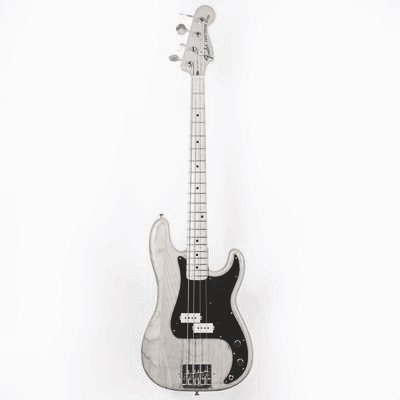
An ad from a well-known music shop in New York popped onto my Facebook feed, and the image of a Fender Precision bass from the 1970s stopped my heart for a beat. Certainly not one of the highly desirable “vintage” basses for sure, but an excellent instrument.

I read the product description and felt my pulse quicken with each line.

“Here’s a really nice Fender P-Bass from 1974 in a natural finish. It has had a refret with new electronics, including a replaced DiMarzio pickup. The pickguard, bridge are replaced. Comes with a nice non-original case. A great price for any player looking for a nice vintage P-Bass with a nice neck and feel!”

So why the heart attack?

I had a 1970s P bass, just like this one. I installed a DiMarzio pickup and replaced the original bridge with a brass Badass. The original pickguard was white, and the replacement one, as noted in the description, is black. The kicker, though, was the featured picture and the description of the neck. I stared at the picture and dug out a photo of me with my P bass. 

I know, just like I know my children, my family, my now aged face. Guitar players know. Violinists know. We know our special instruments as well as we know our art.

Accidental Treasure 

In the late 1970s I had a gig in Jupiter, Florida, home to the legendary Burt Reynolds Dinner Theater. I carelessly leaned my a beautiful cherry Gibson EB-3 against my amp and gasped in disbelief as it fell over, hit the hard tile floor, and split the headstock and part of the neck—a disaster for a musician who was dependent on his instrument for his living.

That Gibson had played a whole lot of sets in a whole lot of places, including a USO tour of Germany, Greece, and Turkey. And then it was gone. 

I found a music store down the road in Stuart. I was hoping to find another EB-3 but instead landed a beautiful Fender Precision. Gibsons and Fenders are different beasts, with distinctly different sounds and feel. This Fender, though, had something special.

It had a beautifully figured natural finish body, a maple fretboard, and a tapered neck profile more like a Jazz bass than a Precision. It fit my hands like it was custom carved. It toured the country, took a horrific trip to Greenland, and later served me well when I returned to New York for the next chapter of my musical career.

Loss

A few years passed. After a long day of rehearsal and recording, I parked on 56th street near 5th Avenue for a few minutes while I ran into a local club that hosted songwriters’ workshops. When I came out, I immediately saw the smashed window. I knew my bass was gone.

It began to rain. It rained all the way home, the long drive up the Taconic Parkway made more brutal by the wind-driven water stinging my face with each gust, the plastic garbage bag taped to the broken window rendered ineffective as it tore and flapped. The loss of my instrument, made worse by the mocking weather.

Over the following days, I visited the music stores and pawn shops around midtown Manhattan, particularly the legendary strip on West 48th street. I hoped that the thief would try to sell the bass to one of these shops, and I would recover my instrument. No luck.

Moving On

Life went on. I got a new bass, a beauty, from Leo Fender’s new company, G&L. I still have that instrument. It is worn, beaten up, poorly refinished, and mostly unplayed now. It is a worthy axe, but my aging hands struggle with the wider neck, and my old body struggles under its heft. I have tried to find a bass with the same magic neck of the purloined Precision over the years, with no luck. Every state and country I have been lucky enough to visit has included a stop at the local music shop: part white whale hunt, part habit.

Coda

As I sort through the impact of this sudden appearance, I realize that it is not just about the bass; it is all the memories that surround it. A bandmate who went with me to the music store became my true and forever soulmate. That story has its share of love and loss and so much music. More than any bass could produce. 

I could repurchase the bass, but that seems somehow wrong. It would perhaps have me playing again, but more likely, it would have me remembering things better left behind.

My only real wish is that wherever it goes next, it will pull some joy from the hands and heart of the person playing that oh-so-perfect neck.

A MAD DESCENT INTO SLOWNESS

Tags

,

Time flies, maturity takes the bus.

There are a lot of older people around here. According to my driver’s license, I am one of them. The arrival of forty-six hundred pieces of mail informing me of my Medicare eligibility confirms what I have denied to myself. Sixty-five. That magic number is here, and there ain’t nothing I can do about it.

I do old guy stuff now. My current obsession is making sure to set the coffee pot for the morning. This routine task is familiar to those with automatic coffee makers and is essential for a few reasons.

First, there is nothing better than getting out of bed and having a fresh pot of coffee ready to kick off the day.

Second, there is little more annoying than the sound of beans being ground early in the morning. It may have been Einstein who discovered the theory that the earlier the hour, the louder the grinder. Please don’t quote me on that. It could have been my wife who said that. See – more old guy stuff – making up facts and blaming the spouse.

Anyway, where was I? Oh yes, setting the coffee pot. A perfectly normal routine. Except now I find myself doing it in the late afternoon. Like, twelve hours ahead of time. Who does that? Old guys, or more specifically, this old guy. Who sometimes forgets to hit the timer button. Which is fine. It gives me more time to try and remember if I took my fiber and vitamins. I am not ready to add Ginko Biloba to my routine, but I’m thinking about it.

I have an old guy approach to my wardrobe now. There are “around the house” pants,  “around town” pants, and “going someplace nice” pants. And shirts? Tattered collars and cuffs are fine with me, and nobody sees them, so what’s the big deal? When I am out and about town, I zip my sweatshirt up. Blue shirts aren’t cheap, so I wear them until the League of Decency intervenes. Uh oh, another old guy reference.

Those commercials about people turning into their parents? I side with the turners. I am the guy who seeks out the manager at Albertsons to tell him what a great job Angela in produce does. I have said, out loud, “I am not paying that much for a box of instant oatmeal!” Yes, I eat oatmeal, and yes, I use instant because who knows how much time I have left? I am an old guy!

I watch Blue Bloods on Friday nights at 10 PM and try to figure out what they are having for Sunday dinner. I understand all of Anthony Abademarco’s double negatives because I grew up in New York. I looked at the cops with a bit of distrust back in the old days, and now I root for Jamie and Eddie to get through a shift safely.

And who knew The Big Bang Theory was so funny? I love the cleverness of the humor, though I find Howard to be annoying. And I admire how much Penny has grown over the years. Ok, I occasionally admire her other attributes; I am old, not dead.

I watch Saturday Night Live, and, as an old guy bonus, it comes on at 8:30 PM here in California. I understand that not every sketch or musical guest will be great. When I get nostalgic, I’ll find old episodes from my younger days and wait for the magic I remembered from those years. And realize that Saturday Night Live has always been hit – or – miss, even with the legends that came before today’s cast and writers. I still get a bit of a thrill when a musical guest that I don’t know blows me away. Thanks, Halsey!

I fight back against time, mostly with music. My ears are frequently ringing after a few hours of serious headphone time. The right ear goes first, an artifact of standing next to drummers back when I could play a whole gig without Aleve and Icy Hot. The thought of strapping on a bass guitar for four hours makes me want to lie on the couch and find episodes of Blue Bloods. But I can sit and listen to rock, punk, R&B until the headphones need recharging. I don’t get upset when I hear an f-bomb in my son’s songs. I think, “great use of the word to make a point.”  I expect to do this until the end, which could be anytime. Until then I’ll try not to exclaim, “What the hell happened to Joe Namath!!!” when he appears on TV to sell me something old-guy-related.

4 PM. Time to set the coffee pot.

The Gathering Place

The transfiguration of wine and wafer into the body and blood of the savior is a mystery accepted by all good Catholics. In my Bronx neighborhood of the 1970s, less ethereal transformations took place. They were as dear and vital to many as the soul-saving sacrament that occurred mid-mass every day and a hundred times on Sunday. Dim the lights and drop the needle. Dull turns exciting, empty turns edgy, and everyone is beautiful for a while.

Night and Day

Gin mill. Pub. Tavern. Bar and Grill. Call it what you will.

These places, often the center of social lives within neighborhoods, shared many characteristics, even though they catered to different clienteles. One particular place occupied a part of my life that seems, in glazed memory, to have lasted forever. In reality, it was a brief segment that set the direction for many lost years.

The Place

The shotgun-style establishment somehow fit a very long bar, a center room divider, and a row of booths into an area no wider than a few supermarket aisles. A wall separated the front from the rear section. The square-shaped back room held a pool table, an occasional makeshift stage, and on particularly wild nights, a motorcycle or two.

This place, not unlike other spots in other memories, morphed from one reality to another as the sun rose and set. Patrons rarely crossed time zones, or if they did, soon moved on to an equally familiar spot at the family dinner table.

A hearty few were able to blend with the crowd, whether day or night. They staked out a strategic spot at the scarred wooden bar, body hunched forward, arms protectively surrounding the dual chalices of a short shot and a tall beer. Fading eyes stole looks around the room and peered into the mirrors that ran the length of the wall behind the stick.

Night

The room growled with acoustic excitement. Inside lighting dimmed as the outside skies gradually darkened. Thirteen souls turned into thirty, and thirty into heat-building, oxygen stealing full capacity. Conversations grew in energy and volume—animating gestures and bursts of laughter or angry exclamations. A blaring jukebox pumped artificial stimulation across even the last refuge of quiet corners and secluded nooks. The jukebox signaled who was in the room at any given time. We Just Disagree, Dancing Queen, Disco Inferno, Good Hearted Woman, Go Your Own Way, and the occasional Danny Boy floated above the haze of tomorrow’s lung disease. A hundred different perfumes melded with an occasional cologne. Hormones, pheromones, and testosterone, unseen as the Holy Ghost, intoxicated as much as the grains and hops in every hand.

“The Drink” lowered inhibitions and raised emotions. Caution left as “what the hell” entered. As hours blurred, hands began to fly. Lust and hate felt very similar in that crush of sweaty chemistry. Out of this simmer grew friendships, marriages, and lifetime feuds built on nothing more than “I just don’t like that guy.”

It was a world where any square yard held a dozen stories that could fill a hundred novels and a thousand songs.

Day

In the daylight, the space was sadly worn and dismaying. The smell of perfume gave way to stale beer, whiskey-soaked wood, and nicotine-covered fixtures. The worn linoleum floors had the color washed away by a million footsteps and a thousand scrubbings that never quite resulted in clean. Wood-themed paneling covered the walls and showed every warp, gap, scratch, and gash earned over countless days and nights of hard use.

Daytime patrons, some closer to corpses, replaced the mass of nighttime bodies. But still, there was something comfortable there, in the unflinching light of day and the noisome smell of bleach and unfiltered cigarettes.  

These patrons were not the characters assigned them by the arrogant young, the cruel bully, or the disdainfully righteous. They were friends, foes, and everyday people who enjoyed the comfort of a familiar gathering spot.

The lives they lived colored every inch of them. Some suffered disease and addiction. They were not losers, just lost. They were young once and danced, sang, argued, and fought. Perhaps, in the patchy and slightly distorted mirror, they still were.

Cheers

Were they us? What might we be under our facades? After facing the same triumphs and failures, experiencing the pain and loss of love, health, mind, and hope, who might we become?

We are old, and we are young. It depends on which mirror we choose.

Here’s to all of us.

Been away, haven’t seen you in a while.

How’ve you been? Have you changed your style?

And do you think that we’ve grown up differently?

Don’t seem the same. Seems you’ve lost your feel for me.

“We Just Disagree” Written by Jim Krueger, performed by Dave Mason

Skate Part II – Facts and Feelings

As the November 20th special Board meeting nears, it would be helpful for all the interested parties to think about what they want and how they can express the desired outcomes with specific, understandable goals.

I’ve offered my thoughts and support for the project to the Board, with encouragement to think creatively in finding approaches to achieving the objective. 

Support

Frequent public comments from advocates call for the CCSD Board of Directors to support the skate park project.  But I have not heard a clear explanation of what SUPPORT means. What is missing that keeps the community asking?

I am assuming the request is for a financial commitment, but what is that in real terms? How much money? How many resources? How much risk? 

The Board adopted resolutions in support of the project and the Main Street location. The District invests time, money, and resources to shape the detail and identify the steps needed to proceed.

The property on Main Street has some financial value. Staff resources, including Project Management, administrative support, permit applications, and associated fees, carry expenses and additional workload. Can all that be calculated in a way that lets everyone understand what the total commitment will be?

Grant

There is a strong push for the Board to commit the proceeds from a yet-to-be submitted grant to the skate park project. The grant money, if secured, would provide a good chunk of change towards meeting project costs. It seems like a logical strategy, so why is this so difficult?

The Grant application has specific requirements. The applicant/Board does not have enough data to meet the required response, nor is there a clear path to getting that information before the filing deadline. “Whatever it takes” is a great rallying cry but certainly not a sensible or acceptable commitment to make.

So, faced with this reality, what are the options?

  • Make a blanket commitment to providing the funding needed to complete the project.
  • Apply for the grant to fund the proposed restroom project on the East Ranch. The project, a required step in building out the community park envisioned in the acquisition of the Fiscalini Ranch, has an estimated cost of $352,000.00. The Board would face the exact grant requirements, funding the approximately $175,000.00 difference to build the restrooms. From where would that money come?
  • Forgo the grant.

Actions

Information the Board might communicate to the public includes :

  • A clear and specific list of unmet requirements.
  • Actions taken or planned to meet those requirements.
  • Identification of who is responsible for those requirements.
  • Steps outside the grant process taken or considered to keep the project moving forward.

Facts and Feelings

Keep the passion, keep the focus, but give the Board more than emotion. They are responsible for making decisions based on community wants, needs, and available resources. Bring facts that support the feelings. Other parts of the community don’t have the same passion for the project and need more convincing to get behind the cause. The Board represents those folks too.

 Some examples that come to mind are;

  • How many users will the park serve? “xxx youth live in the community, attend the schools, participate in other sports or activities.”
  • Skate park users also include…groups.
  • Having this facility in this location will drive xxx to local businesses/increase library usage/improve the overall section of town.
  • Having an accessible youth-oriented facility reduces negative behaviors by… and encourages positive engagement by …
  • Directing District resources to the skate park over other funding needs makes sense because…

Partners, Not Adversaries

 This project will require a lot of funding and will take a lot of time to complete. The best way forward is a balance of aggressive advocacy and collaborative problem-solving. This formula will succeed with a complete understanding of all the moving parts and a team approach.

Some models have proven successful here in Cambria. Two that come immediately to mind are the Cambria Pickleball facility and the revitalized Cambria Center For The Arts. Both examples have been successful through collaborative private/public organizations working towards common goals. What can we learn from these successes?

Skate Cambria does a great job of advocacy without division. What an excellent example for the kids and the adults in the community. As challenging as this project is, having the values that Skate Cambria demonstrates should guide us all.


Meet the Smith family – parents, two kids, and a pet dog Lassie.

Timmy wants a car. Sally wants to study at Yale. Lassie wants that dangerous well Timmy keeps falling into filled and sealed.

The parents want to deliver for the three requestors but there is only so much money coming into the household, and it needs to cover all the expenses the family generates. Shelter, clothing, food, insurance, vet bills, car payments, braces, maintenance, more braces (those tumbles into the well can be rough on orthodontics); it all adds up.

The family negotiates, prioritizes, defers, and pursues alternatives.

Timmy gets a scooter instead of a car. Sally goes to Cuesta for a year while the tuition fund builds. Lassie hangs around the Infrastructure and Resources committee, who realize “oh yeah, we need to do something about that well!”

They also find ways to generate additional income.

With his new braces, Timmy makes a great model for his Orthodontist’s website and mailer campaign.

Sally is a perfect spokesperson for an online university, playing a struggling but ambitious student who finds her dream fulfilled in as little as two years.

Lassie reboots her classic television series, rebrands as “Lassie’s Marvelous Universe”, adds some cats, and sells it to Netflix. Donates a few bones to the skate park project.

Building A Skate Park

Tags

, ,

Beautiful Cambria never lacks a passion project. The current drive to build a Skate Park on Main Street to replace the one removed due to its deteriorating condition is an excellent example of the challenges of such endeavors.

What might seem like a simple, straightforward project is much more complicated than perhaps people realize. Over the recent weeks, I had multiple conversations with representatives from all parts of the puzzle, including leadership from Skate Cambria, CCSD Board members, and staff. My goal is to present a reasonably clear view of the moving pieces that make up this effort. There are levels of complexity beneath each topic, so I have added links to available details so readers can examine the same data. Here’s a simplified takeaway from those discussions.

The Simple

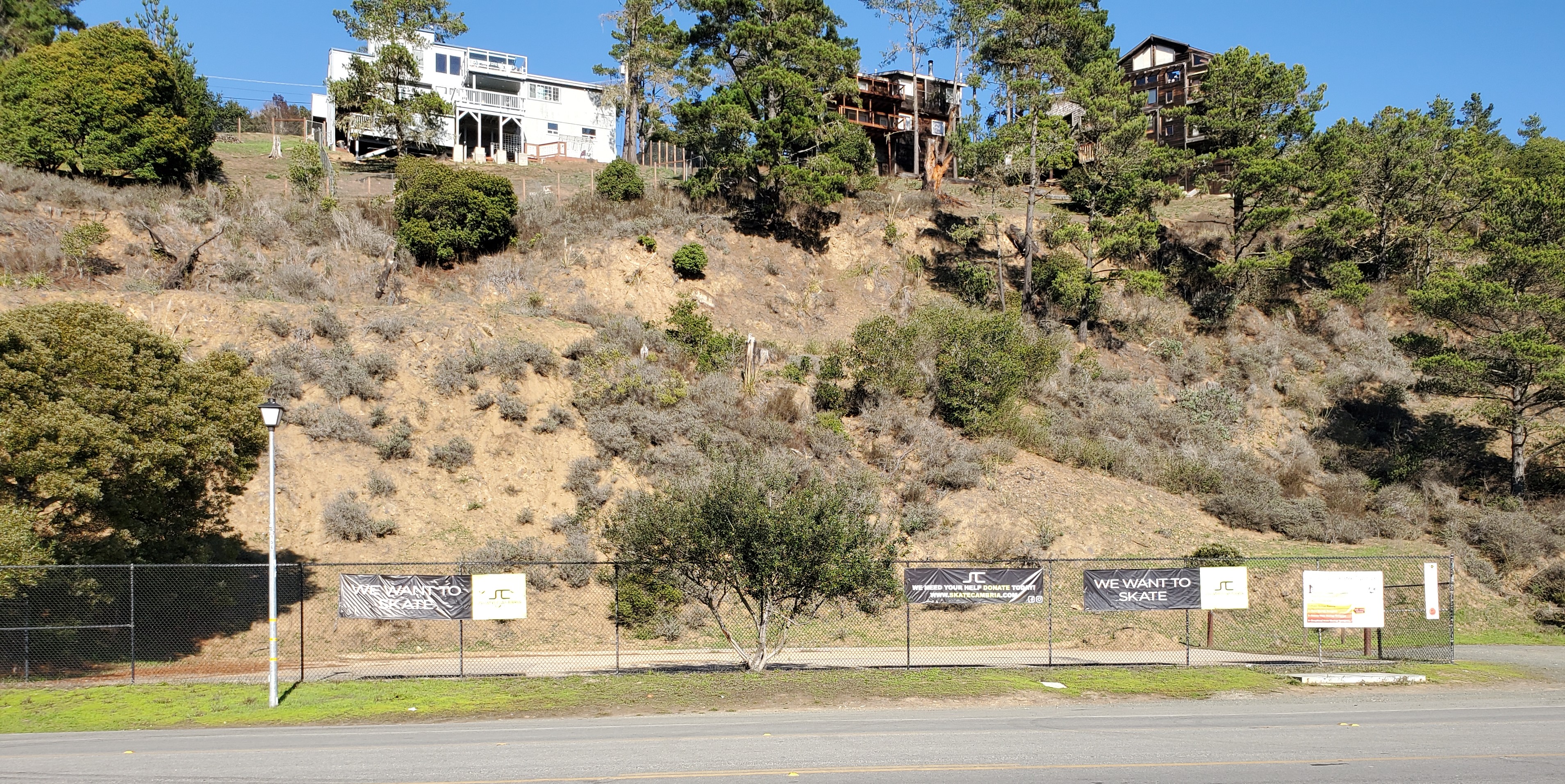
The goal of the project’s advocates is to build a safe, accessible skate park on Cambria Services District property on Main Street, next to the Cambria Library and across the street from the Vet’s Hall. The previous community-built facility occupied the site before being dismantled due to deteriorating and unsafe conditions.

Proposed Site on Main Street

The Players

A community organization, Skate Cambria, is deeply involved in driving the project forward. Skate Cambria has done an admirable job of gaining community support, as well as skateboard-related industry interest. The group’s fundraising efforts, managed through a local non-profit, have reportedly amassed approximately $175,000.00.

The Cambria Community Services District is involved in the project for two main reasons. First, the property belongs to the District, and by extension, Cambria’s taxpayers. As a community asset under the CCSD’s jurisdiction, there is a responsibility to manage the parcel appropriately.

Second, Cambria’s PROS (Parks, Recreation, and Open Space) Commission serves as an advisory body to the CCSD Board of Directors. PROS has a limited budget and no legal authority to take action without the CCSD Board of Directors’ approval.

The Challenges

As always, the biggest issue the project faces is funding. The preferred location brings a host of challenges that drive costs, and therefore injects financial risks associated with uncertainty.

Information and presentations from the CCSD Special Meeting on October 30th, 2021

Based on detailed presentations from the design and engineering firm Spohn Ranch and the Project Management lead from CCSD, the current projected cost sits at Six Hundred and Sixty-One thousand dollars. This number, provided by Spohn Ranch, carries several caveats, including potential areas of cost reductions.

The Project Management presentation details the requirements from SLO County’s permitting authorities. Concerns include the need for a restroom and accessible parking for the facility. Both of these requirements have the potential to add significantly to the final project costs. There are potential approaches that could reduce or eliminate the need to build out both items. Final project requirements will be defined through Value Engineering/redesign activities and negotiations with the permitting agencies.

Funding Sources

Skate Cambria’s Fundraising Report

Skate Cambria indicates they have raised approximately $175,000.00 in donations. They continue their fundraising activities and lobbying for additional financial support from the community and other interested parties.

A potential funding source under review is a PROP 68 grant for $177,000.00. As part of the application, the District must identify the project’s cost and all funding committed to the project.

Gaining a more accurate and realistic total project cost requires significant interaction with the permitting organizations, complex project re-engineering, and aggressive negotiations among all parties to get to a final project plan. The filing deadline for the grant is December 31st, so it is a steep climb to gather all the data, crunch all the numbers, identify all the funding sources, and go through the process of budgeting and allocation of District funds.

Based on just the “known” estimated costs outlined by Mr. Spohn, the quick math is:

Estimated Project Cost –  $661,000.00.

Assume the $177,000.00 grant is secured. Add the Skate Cambria funds of $175,000.00.

The difference that the CCSD would need to commit to contributing to meet the grant criteria is $309,000.00.

Remember, these figures are based on estimated costs and do not include any additional expense to meet required permit conditions. Nor do they contain any cost reductions gained through redesign and Value Engineering.

Regardless of how the project is ultimately defined, any District money must come from the general fund. That is the same pool of money that pays for the Fire Department and The Fiscalini Ranch Preserve, among other things.

Next Steps

The Board has scheduled a special meeting for Saturday, November 20th, to discuss this project. The meeting will be available through Zoom, and the public is encouraged to share thoughts and suggestions on how to move forward. It is always better to participate in the process and make your judgments rather than rely on other people’s perspectives.

Check the CCSD Calendar for ZOOM links and meeting agenda. 

This project is a positive example of how citizens work together to meet goals that affect the larger Cambria community. Skate Cambria demonstrates the passion and commitment to the Skate Park project and the equally important job of being great role models for the community, young and old.

The CCSD Board and staff continue to do the difficult work of evaluating all the information, balancing the community’s needs, and making the hard decisions about spending limited resources most responsibly.

Beautiful Cambria in action!

Boy Meets Girl

Tags

Romance in the Time of Covid

The late afternoon sun pokes through the front-facing windows of 927 Brewery, casting elongated shadows as it bounces off tabletops and shines through the amber hues of partially emptied glasses.

A thirty-something man enjoys a flight of craft beer and gazes at the concert posters and photos that cover the walls of the well-worn taproom. Behind the short bar, a bearded man wipes his eyeglasses with a towel, turns, and glides through a set of curtains. He soon returns, accompanied by the clinking of clean beer mugs. He places them within reach of the taps and nods his graying head in satisfaction. He notices that the man has caught the eye of a fellow patron, a pleasant woman dressed casually in a sundress, sandals, and a cute little short-sleeved sweater. The awkwardness of the eye contact soon fades as both patrons recognize the mutual interest.

So begins another page in the never-ending story – Boy Meets Girl in the Time of Covid.

They remain seated apart for a while, sharing rueful smiles as they dance the sadly familiar “moving of the mask.” On, off, sip, savor, repeat. Their eyes connect between each taste, checking to see if they were doing it correctly. It seems both silly and serious, as flirting sometimes does. After a while, she decides some real conversation might be pleasant. She casually asks, “Would you like to go outside? We can chat and enjoy the fading sunlight and the sweet-salty taste of the ocean air.” He smiles agreeably, grabs his mask and cap, and politely waits as she makes her way to the door.

They continue a cautious conversation on the outside patio.

“This is a cool little place,” she offers. “Is this your first time here?”

He shakes his head slightly. “No, actually, I stopped in here one afternoon, before all the craziness of Covid. It was quite busy. The guy behind the bar was hustling to keep glasses full and conversations going. He wore comfortable shorts and sandals, as I recall. I wonder where he is these days.”  

“Across the street,” a fellow patron answered, pointing to a winetasting room filling the curving intersection on the opposite side of the narrow block. “Still wears the shorts!”

“Good for him!” she declares. “All the bartenders where I live wear camo and cowboy boots: a different world, a different everything. I love the variety of people in Cambria. You can talk to ten strangers, and odds are they will be from ten different places.”

He nods in agreement and asks, “So, where is home for you?”

“A small place called Wilseyville, up near Sandy Gulch. Beautiful country, lots of trees, horses, and cows. I grew up there, and even though I travel a lot, I still call it home. It was a safe place to ride out this terrible pandemic, but frustrating to be stuck where nothing much has changed over the years. Overall, though, it is home.” After a thoughtful pause, she continues her story.

“I heard about Cambria from a neighbor. She mentioned that a local girl had landed a great job and moved down this way with her husband. I only knew the girl to wave to, so we probably wouldn’t recognize each other if we passed at the Farmer’s Market. I do remember her love of camo-themed clothes, which she can wear ‘cause she is such a pretty girl. Anyway, I looked up Cambria on the internet, and it seemed like a great destination for one of my freelance writer road trips. So this visit is a bit of a working vacation.”

 She watches him take a sip, then asks him about his journey to the Pines by the Sea.

He gazes up at the surrounding hills, and answers. “I used to come up here with my parents during summer vacation. We would use Cambria as our home base and take great overnight trips to the campgrounds up through Big Sur. It seemed like a place from another time, and I guess it is. I’ve come back on my own a few times to recharge and connect with the environment. Right now I’m in town on business.”

“Ha, something in common!” She smiles. “Working and enjoying this great little town. What kind of work do you do here?”

He starts to reply, then quickly stops as he sees a Q-tipped colored head peering over the steering wheel of a slowly passing car. The driver’s eyes narrow when she spies the couple. She grabs a notebook and pen and furiously scribbles something with her left hand as her right simultaneously raises a small camera and clicks off a few shots. She takes a hard turn onto Main street and disappears behind the frozen yogurt store.

“Well, that was weird,” whispers the woman.

“Not for Cambria,” he replies.

He perks up a bit and smiles. “To answer your question, I am a (stage whispers) consultant, doing some analysis for the local Services District. I’ve learned saying you’re a consultant here is like saying NIAGARA FALLS to the Three Stooges. SLOWLY I TURN, STEP BY STEP, INCH BY INCH AND I….” He notices her puzzled look and adds, “The Susquehanna Hat Company to Abbott and Costello, maybe?”

She looks at him and says, “Three Stooges? Abbott and Costello? I’m sorry, I don’t follow politics.” She waits for a beat, then whoops out a “NyukNyukNuk,” followed by a loud “Hey ABBOTTTTTTT!!!!!!!!”

Oh my god, she’s perfect for me!”

Oh my god, I’m perfect for him!”

Any reservations about continuing the evening fade away. A different type of energy takes over.

“So, where are you staying?” he asks, mentally calculating the distance to any of the local hotels.

“The Bluebird Inn, on Main Street,” she answers, checking her guest key to be sure. “It’s in a good location and more affordable than the places on Moonstone Beach.”

“Wow, what a happy coincidence! I’ve been staying there for a week now. I’m finally getting used to the sound of the streets rolling up around 9:30.”

“Speaking of things shutting down early, I could go for some food. You’re practically a local; where do you suggest?” She then corrects herself with, “Oh, I’m sorry, I should have asked if you would like to join me for a bite.”

“That sounds fantastic,” he quickly responds. “Let’s start walking. We’ll decide along the way.” She reaches out and lightly places her hand on his arm, and says, “Sounds like a plan!”

The man behind the bar is fussing with a playlist, skipping through songs until he stops on a rollicking, aggro-country Americana folk tune. Neither one of them could identify the music, so the barman explained. “It’s called “Buddies and Barbs” by a local singer-songwriter team. It tells the tale of the ongoing dialog that passes between Cambria’s tribes. It is sung and played in two different keys at the same time.

“Sounds kind of painful,” she says in a puzzled voice.

“You have no idea,” the barman replies, glancing at a faded green flyer that bore his image, and the washed-out words “vote for …” then a smudged something.

Armed with this bit of local lore, they say goodbye and head out to continue their adventure. He suddenly stops, asks her to wait by the door for a quick minute, and dashes across the street. He returns carrying a bottle of Pinot Noir. He gallantly proffers the wine. “To a great evening, and yes, he still wears shorts.”

They walk towards the East Village. The two now-cozy visitors decide to get something from Indigo Moon to enjoy back at the Inn. While they wait for their order they savor a relaxing evening cocktail. By the time they reach the Bluebird, they are familiar as old friends.

With food and wine in hand, they silently question, “Your place or mine?” She points to her room, unlocks the door, and waves him in with an exaggerated bow. He places the food and wine on the dresser. She brushes against him and reaches into the bag, forgetful of what they had ordered but not caring.

The assorted cheese plate calls out for an accomplice. Two tumblers of Pinot oblige. They each take a slow sip of the wine and begin to nibble on the cheese. A candle burns, a curtain closes, and a duvet finds itself tossed carelessly to the floor. Soon, the cheese is finished, but not the nibbling. Each looks to the other for a signal. The room heats up. Clothes start to fall away.

“Wait,” she says suddenly. “I am totally into what we are doing and definitely want to continue. But I have to be certain that we take all the right precautions. Do you have…”

He smiles confidently and reaches for his wallet, enjoying the building excitement. He opens it slowly, reaches in, and gently extracts the very thing needed at this moment. He notes the slight outline it has left on the soft leather. He places it on the nightstand, gently smooths the creases, and shows just how prepared he is with a slightly trembling hand.

She takes it from him, studies it for a moment, and quietly sighs, “Moderna. Two doses. Oh, yes!”

Things begin to accelerate when another thought creeps in. Not wanting to break the mood again, she slips her hand into her nightstand and says seductively, “I brought something special with me, just in case a night like this might happen. I… I’ve never used one of these before with another person, so I’m a bit nervous. Maybe you could help me with it?”

Now delirious with fantasy, he agrees faster than Meatloaf by the dashboard light. She brings her hand up and slowly reveals what she has in mind. She looks him deeply in the eyes, places it in his eager hand, and says, “This is for you. Swab me. Swab me good.”

“Are you sure about this?” he asks.

“What an odd question,” she answers. “This is a time when you absolutely do not want me to be positive. Now enjoy the best fifteen-minute wait you will ever have.”

“Hey Abbott indeed,” he thinks as he unwraps the rapid test kit.

In the blur of passion, neither notices the growing tendrils of smoke beginning to fill the room. The insistent beeping of a close-by alarm breaks through the fog, causing them to jump up in confusion. Confusion quickly turns to alarm. Small fingers of flame dance atop the dresser, consuming the carelessly discarded swab packaging.

She grabs a half-empty tumbler of Pinot and pours it over the spreading flame and watches, fascinated, as the remnants of the assorted cheese platter melt into a weird little fondue.

He grabs a towel from the bathroom and wets it in the sink; a painful, slow process. Water dribbles through the regulator installed on the faucet. With little time to waste, he gives up and drops the slightly damp cloth atop the smoldering mess, creating a Picasso-like bas relief of a picnic gone horribly wrong.

Under heavy pounding the door yields, and the room fills with first responders, led by a small but forceful Fire Captain. Her ice-blue eyes take in the scene, and she quickly gives an order to her crew. “FOAM IT ALL DOWN!” They do so with great enthusiasm.

Mission accomplished, the Captain offers a smart salute to the cooled-down couple and orders her team out. As they leave, a newly-minted reserve firefighter, shaken by her first encounter with live danger, receives some brotherly advice from a red-headed engineer who ends his pep talk with “…and this is why we always keep a supply of rice cakes handy.”

Wrapped in  rumpled sheets and wearing flimsy paper slippers, the couple watch the firefighters depart. They are grateful, albeit a bit embarrassed by the whole messy event. As the truck rumbles past, the captain gives him a slight smile and a wink. He remembers that he is scheduled to meet with the Fire Chief and his team the next day.

“Well, this is a story that won’t be featured in my next travelogue,” she says with a chuckle.

“Amen to that” he mutters. “I guess we should get some rest. My room is undamaged. We can sleep there.”

She nods and adds, “Plus, we are already swabbed, so…”

They join hands and disappear into the Bluebird, as a car slowly rolls by. A nearby streetlamp briefly illuminates a Q-tip colored head. With the seething sound of an outraged “consultant indeed!!!” and the click of one final picture, all becomes silent in Beautiful Cambria.